
Venture inside the mind of a British architectural pioneer at Compton Verney
Compton Verney is charting a grand tour of designs by one of the greatest and most pioneering British architects in its new exhibition.
Towering Dreams: Extraordinary Architectural Drawings will feature 29 works by Sir John Soane (1753-1837), from the collection of Sir John Soane’s Museum, including 14 that have never been exhibited before.
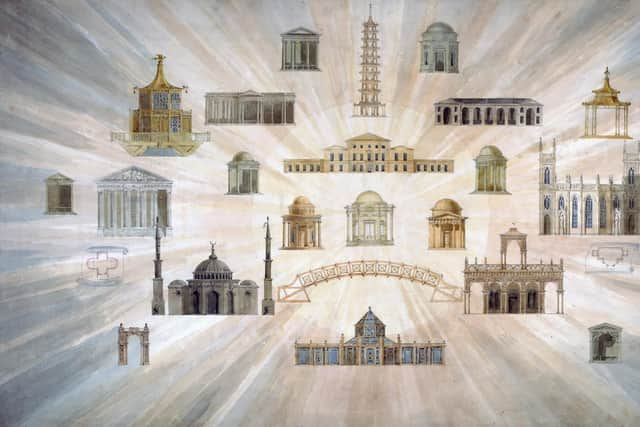

Amassed throughout his remarkable life, the drawings on display will include designs for Soane’s own buildings, drawings by his contemporaries and students, as well as those by some of history’s most famous architects such as Piranesi (1720-1778) and John Thorpe (c.1565–1655). They showcase the imaginative ways in which architects in the 18th and 19th centuries understood the world around them, and the fantastical ideas from which they drew inspiration.
The son of a bricklayer, Soane rose up the ranks to become Professor of Architecture at the Royal Academy. His designs and contribution can be seen across the UK – public buildings such as the Bank of England, cultural assets like the Dulwich Picture Gallery, country homes throughout the UK and Ireland, and the interior of Number 10 Downing Street.
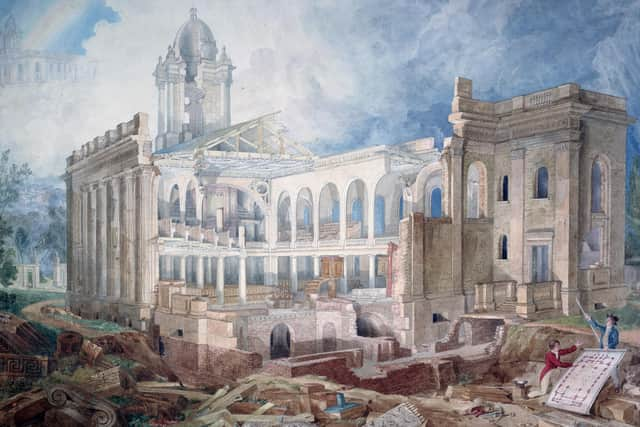
Following a European Grand Tour that lasted for over two years, Soane sought to elevate the practice to its rightful place alongside painting and sculpture and wanted to educate architects about the history of buildings.
This resulted in 12 lectures that he began to deliver in 1810. Many drawings featuring in the exhibition were first commissioned to accompany this lecture series. Topics range from the classical history of architecture and a survey of British buildings to construction theories and methods.
Soane was the first to illustrate his lectures on such a scale, commissioning almost a thousand drawings. Made at his own expense, these drawings formed the first visual compendium of world architecture and architectural theory in Britain.
As well as the commissions that are still standing, or the ones that were built but have since been altered or lost, Soane would also create buildings on paper that would only ever exist in his imagination.
The exhibition will look at how architects tried to understand the “first principles” of ancient buildings and how they adapted them for their modern age. These include St Paul’s Cathedral overlaid on the Great Pyramid of Giza, as well as the Circus at Bath superimposed on the Colosseum.
Also included is also what the historian Sir John Summerson (1904-1992) termed “perhaps the most important relic in existence of architectural drawings and designs in the reigns of Elizabeth and James I”. The Book of Architecture of John Thorpe (c.1565-1655) consists of over 290 drawings from the 1590s to the 1620s, mainly English buildings, recording the post-reformation country that the likes of Shakespeare (1564-1616), John Donne (1572-1631) and Christopher Marlowe (1564-1593) inhabited. The survey pages include private homes as well as inventive plans of Thorpe’s, including the peculiar idea to create a building that resembled his own initials.
Curator Jane Simpkiss said: “This is an amazing opportunity to explore treasures from one of Britain’s most fascinating museums and to recognise the incredible creativity and imagination that underpins architecture in the 18th and 19th centuries. Buildings from this period still define much of the built environment in Britain today and great estates, civic buildings and museums can seem very traditional. Through this exhibition we wanted to show how fantastical it was to design structures after ancient Greek temples and pyramids.”
The exhibition runs from March 15 to August 31. Visit comptonverney.org.uk or call 01926 645500 for details.