
Banburyshire health inequalities report 'focuses on privileged villages'
A report on health inequalities in Oxfordshire has 'focused on privileged villages', a Banbury campaign group says.
Keep the Horton General (KTHG), whose work includes health care accessibility for ‘Banburyshire’, says choosing Chipping Norton, Cropredy, Deddington and the Heyfords for surveys leaves out many areas of need.
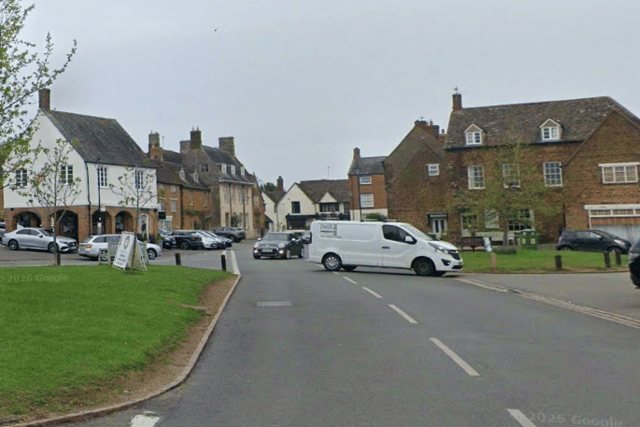

Charlotte Bird said: “These are communities with regular bus services and all but Heyford have GP surgeries.
"They are places where people are wealthy, own their homes, have cars, drive children to school and can afford fresh vegetables, gym memberships, take children to sports centres and to refill their central heating oil tanks.
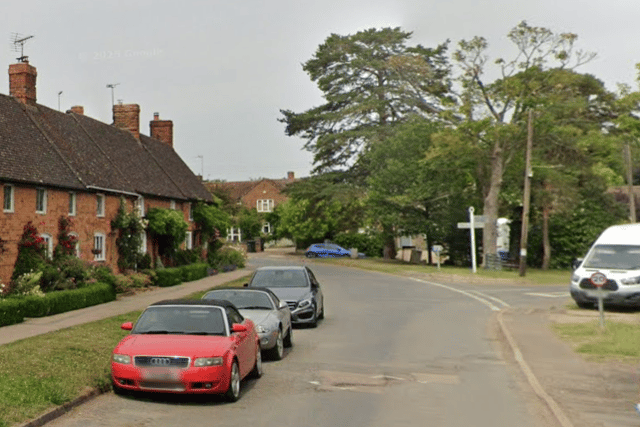
"What about the enormous number of people all around Banbury and many surrounding villages with no surgery or buses, who are struggling on meagre incomes in a worsening cost-of-living crisis.
"These people suffer from the social determinants of health – poor housing, lack of public transport, often inadequate diets, difficulties in education, lack of access to GPs and hospital care.
"It is astonishing that those running these surveys have not contacted people working in the field, like us. What is any of this going to prove and what are they going to do about it?”
Oxfordshire is a Marmot Place and as part of Oxfordshire County Council’s (OCC) bid to tackle the social determinants of health it commissioned Healthwatch Oxfordshire and Community First Oxfordshire to map health gaps across its countryside in a Rural Inequalities Scoping Report.
This was designed to survey and conduct focus groups with over 850 residents across 14 rural towns and villages to uncover barriers to healthcare access, isolation and transport issues.
Healthwatch published its report – see here – and a further report is expected on November 16.
Its article says the communities chosen were identified as having significant pockets of health inequalities, based on data and local intelligence.
A spokeswoman for OCC said: “The fourteen rural areas were selected using a collaborative approach between officers from Cherwell, West Oxfordshire, South Oxfordshire and Vale of White Horse District Councils and Oxfordshire County Council.
“We used a range of national and local data on people’s health and the factors that can affect it to help make the selection. We combined national and local data with the knowledge of district councils to identify areas for further investigation. No single measure was used to select an area. We then commissioned the community engagement work to better understand the residents’ experiences.”
“It was not intended to assess every rural community in the county. The 14 areas enabled us to hear directly from a range of residents, but their inclusion does not mean other villages, including those with limited access to transport or local services, do not face significant challenges,” she said.
"The findings add to the evidence available to organisations across Oxfordshire when considering prevention, health inequalities and place-based planning, and have been presented to the Oxfordshire Health and Wellbeing Board and shared with relevant partners.
“The initial work is complete and partners are looking at how findings could help service design, including health. Budget will be agreed once the next steps have been decided.”
- There is no additional direct funding attached to being a Marmot Place. The council is expected to use the results of scoping reports to shift how it already spends its budget.