
Banbury planners urged to prevent building 9000 homes on contaminated ground
Heyfords residents say building 9000 homes where ‘forever chemicals’ are contaminating soil and water must be prevented.
The PFAS (polyfluoroalkyl substances) are a deadly legacy from firefighting foams used by the US Air Force at a ‘fire pit’ on the old airfield, where old FIII fighter jets were set alight and used for extinguishing practice - using tanker after tanker of the chemical-ridden liquid.
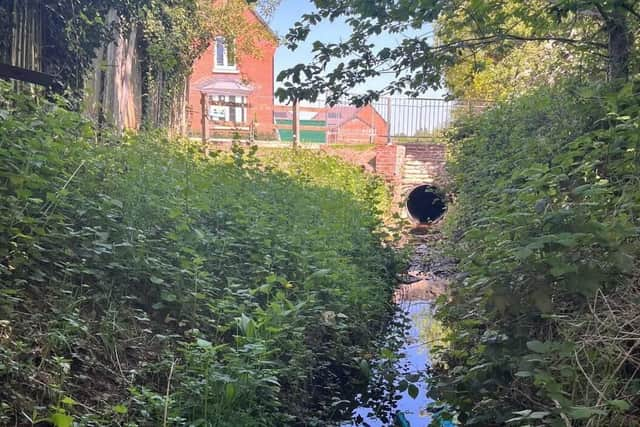
The waste was washed down drains and soakaways, leeching into the surrounding soil, into ditches, brooks and waterways. It was recently confirmed that the the soil at the fire training area had the highest soil PFAS result ever found in the UK.
Campaigners against development of the site to protect people for miles around say use of the foams all over the airfield has caused widespread contamination which is being spread.
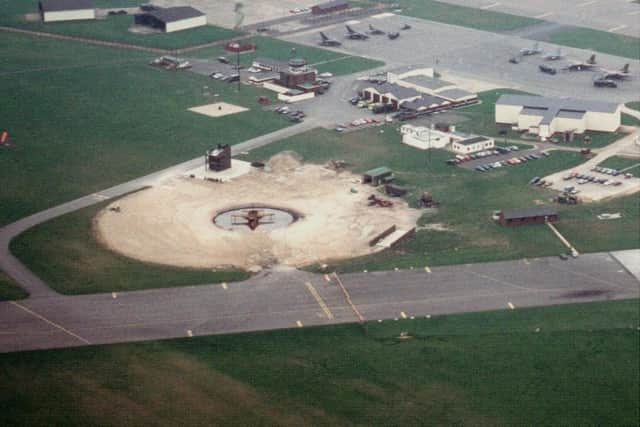

In the absence of official examination, they have spent £15,000 on expert testing of soil and water courses which showed one sample to be 43,000 times the recommended level. They were the highest readings of PFAS out of 700 water bodies tested nationwide - three times as high as RAF Fairford and four times that of the National Firefighting College.
Cherwell District Council (CDC) is due to discuss an amended planning application by developers Dorchester Living for 9,000 homes and five schools on the airfield side of the base. The opposite side has already been redeveloped. Here, residents are equally concerned about the land on which their homes stand.
A target date for a decision is December 11 with the Cherwell planning committee meeting on December 10.
Campaigners are urging as many as possible to write objecting to the plan. See here. Submissions must be made by November 21. Over 1,000 objected to the first application in 2025. However those people were not aware of the new PFAS evidence.
Dorchester Living told the Banbury Guardian: “No new homes will be built on affected land until it has been remediated to the satisfaction of CDC and the Environment Agency. We are committed to addressing the PFAs on site as part of its redevelopment.”
Campaigner Charlotte Harris said: “There are 14 streams whose source is the plateau at Heyford. They go into the River Cherwell south and south east and the Padbury brook goes north east. It’s going out everywhere and no one knows where.
"The developer thinks it’s limited and Cherwell thinks this can be dealt with by planning conditions but conditions are difficult to enforce.
"This is contamination on an unimaginable scale. To illustrate, one air base in the USA has already spent £96m trying to decontaminate the land around it and it’s about half of what they need.
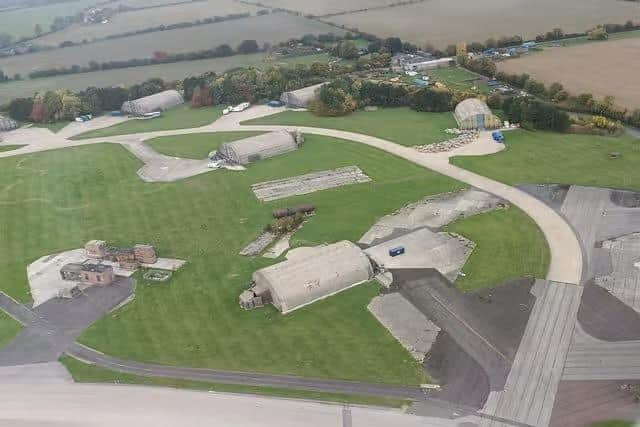
“Geologically, Heyford is a limestone plateau. It's perfect for an airfield but unfortunately the limestone plateau has a principal aquifer beneath it, an underground reservoir.
"The PFAS have gone through the limestone, which would ordinarily filter out impurities in water – but it cannot get rid of PFAS and so it's gone straight into this underground reservoir which is drawn on for water. It would be impossible to get out.
"Farms use water from boreholes supplied by this. People drink from them. Thames water can extract from the aquifer; they say they don't,” she said. "Now is the time to sort this out. There is a duty of care to 1300 houses already there.
"It must not be made worse by adding 9,000 houses - 27,000 people. If you build and remediate at the same time, the pollution is stirred up and made worse. They should remediate and build later but no one knows the extent of it, or the health implications.”
A UK Health Security Agency investigation was launched this week to measure the public health effects of PFAs. Initial findings are expected in 2027.
"We don’t know what the effects are but in other countries they have found significant links to various cancers including testicular and kidney, also thyroid problems, high cholesterol, immune problems, preeclampsia and more,” said Mrs Harris.
“I live in the Cherwell valley where it floods. It’s a beautiful place but it’s awful to feel we can’t allow the children to play in the river or that it may not be healthy to eat home-grown vegetables. Children, because of their relative size, are the greatest receptors.
“All these years cattle have been drinking at the brooks and grazing the fields. People’s hens have been providing eggs. It’s scary.”
Campaigners say planning permission cannot be granted legally until the applicant has demonstrated the site can be made safe for its future intended use.
"They admit their testing and remediation strategy is incomplete. They need to do a full, extensive site investigation and a full controlled waters assessment, which is not what they've done because half the outfalls are dry at the moment after the drought,” said Mrs Harris.
Paul Silver, CEO, Dorchester Living, said: “The reports on the planning portal set out the first stage of PFAS investigation at Heyford Park. They indicate the PFAS is linked to firefighting foam used when the site was an operational airbase, decades before our involvement.
“Two further soil reports have since been completed and shared with CDC and they give a fuller picture. They confirm elevated levels of PFAS in soil are concentrated in small, undeveloped parts of the site, mainly around the former fire practice area – which was expected based on the historic use of the site.
“Test results show PFAS levels well below the government-sponsored screening levels in the residential areas and in public open spaces, confirming they are safe. Thames Water is has also confirmed the drinking water in the area is safe.
“We are proactively working in close consultation with CDC and the Environment Agency. A strategy for further investigation has been submitted as part of the planning application and work will continue on a phased basis with any necessary remediation secured through the planning process.”