
Developers Habitat Bank near Banbury is 'Grade A greenwashing' say opponents
A habitat ‘bank’ near Banbury, where developers can buy biodiversity they are unable provide with new housing, is Grade A greenwashing according to some opponents.
Groups against foxhunting have hit out at the scheme at Ells Farm, between Broughton and Bloxham, which is being paid by housing developers to enhance the environment, while allowing the Warwickshire Hunt to ride over the land. Warwickshire Hunt say they were following a trail.
The habitat ‘banking’ scheme allows developers who are unable to provide biodiversity on the housing estates they build, to buy it in the countryside on space offered by landowners in return for payment.
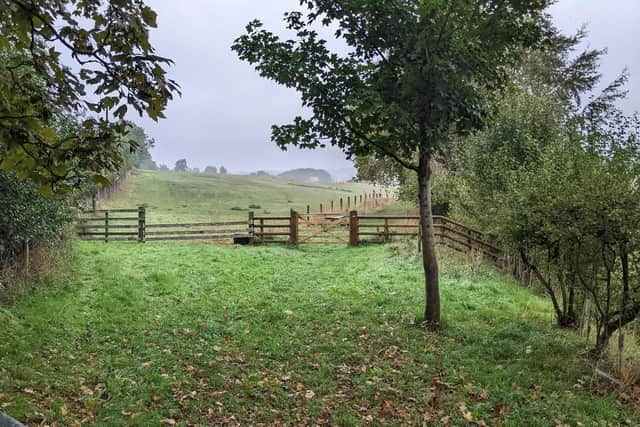
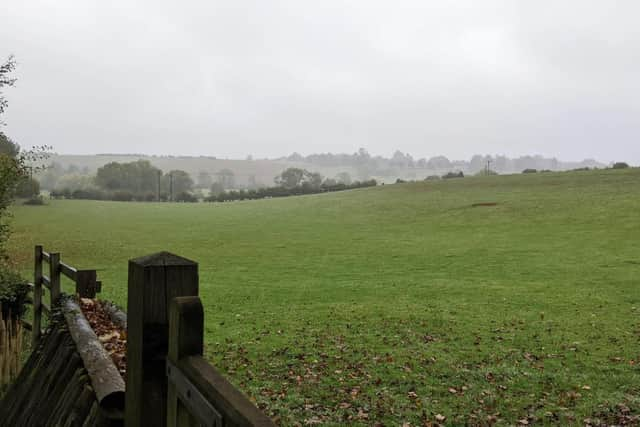
In return, the landowners at Ells Farm have promised to enhance the 36 acres by establshing lakes/ponds, species-rich hedgerows, improved grassland, scrub land, trees and woodland.

A member of Locals Against the Warwickshire Hunt (LAWH), told the Banbury Guardian: “When developers build a new housing estate or development they are often legally required to make up for the natural habits they destroy.
"If they cannot restore what they have damaged directly they can buy ‘biodiversity units’ from a habitat bank, such as Ells Farm.
"Habitat banks are plots of land where landowners, farmers, or conservation groups go to work planting woodlands, restoring wetlands, or growing wildflower meadows. In buying these natural habitats, developers can offset their environmental footprint and the damage their development has caused, while landowners get paid to maintain and protect these thriving ecosystems for decades.
"Even if you believed that Warwickshire Hunt were trail hunting, allowing packs of dogs and riders to cross Ells Farm breaks the objective of the habitat bank where wildlife habitats are proactively encouraged – enabling wildlife to thrive."
He said Warwickshire Hunt’s hounds, even if trail hunting, may accidentally chase foxes.
"The physical damage to habitats and the severe disturbance to wildlife populations would surely break the ecological criteria required to maintain and generate biodiversity credits,” he said.
"In two phrases this can be summed up as ‘Greenwashing’ and ‘Canned Hunting’. I wonder how these developers would feel if they knew that a service they had bought was elite level greenwashing.”
He said he thought action should be taken before the entire Habitat Bank project fell into disrepute.
In a Substack article, West Midlands Hunt Saboteurs claim the Warwickshire Hunt ran across the land twice since the Habitat Bank was established in 2023. Meanwhile the landowners fenced in a footpath specifically to ‘reduce disturbances to wildlife, particularly from humans and dogs while still enabling the local community to enjoy the increasingly biodiverse surroundings’.
Warwickshire Hunt described the statements made by the saboteurs as questionable.
Master of Foxhounds, Sam Butler, said: "We were not hunting illegally. They claim we were. Where is the evidence? If there is evidence then we would be accountable to the police. This is part of a propaganda campaign against the hunt and its very many rural supporters.”
Dr Charlotte Watkins, from Cherwell District Council’s environment department told objectors the farm retains ‘full ownership and control of their land and can continue to use their land, or allow others to use their land, for lawful activities provided these do not conflict with the obligations contained in the habitat bank legal agreement or compromise the agreed habitat objectives for the site’.
The LAWH correspondent said by setting the land up as a Habitat Bank, the project will deliver biodiversity units, brokered and managed through the Trust for Oxfordshire’s Environment (TOE), that will be sold to fund the delivery of the Habitat Management and Monitoring Plan.
“There is no mention of how much the units will be sold for; however it is understood that high and very high-distinctiveness habitats, which Ells Farm is categorised as, go for £40,000 – £90,000+ per unit,” he said.
Trust for Oxfordshire’s Environment (TOE) said: “Habitat Banks are legally secured and any breaches of the relevant agreements that result in damage or destruction to wildlife and habitats will be addressed as and where they arise. TOE consider allowing trail hunting on land as a matter for the landowner and any situations where habitats are damaged or its value undermined as a result of such activity would be managed appropriately.”
Cherwell District Council said: “Land must be secured by a legal agreement by a council or responsible body who commit to monitoring it to agreed habitat targets and types for 30 years. Landowners must register with Natural England who will also check their requirements are in place.
"Where Biodiversity Net Gain is required, developers are responsible for securing the necessary biodiversity units.
“The establishment and operation of a habitat bank is funded by the landowner and through the subsequent sale of biodiversity units to developers.
“Landowners can come forward with a request to enter a legal agreement with the council. The council do not request it.
"The council's role is limited to ensuring that the habitat bank is secured through the appropriate legal agreement and monitoring whether the agreed habitats are created, enhanced and managed in accordance with that agreement over the required 30-year period.
"The council's role is to monitor compliance with the legal agreement and the successful creation, enhancement and long-term management of habitats in accordance with approved plans and legal obligations.”
“The council is paid a monitoring fee at £564.72 per report and legal costs of £4,000.
“The council does not receive Section 106 contributions generated through the sale of biodiversity units and does not receive income from biodiversity unit transactions."