
Oxfordshire County Council threatens legal challenge over three-unitary plan
Oxfordshire county councillors are struggling “to accept that their organisation will be abolished” amid fears about its spending in what could be its final years of existence.
On Thursday, October 29, the government announced its intention to push forward with the abolition and replacement of Oxfordshire’s county, district, and city councils after reviewing a decision made under Keir Starmer amid mounting legal challenges.
It plans to create three new ‘unitary authorities’ which hold powers and run services currently split across county and district authorities, such as roads, planning, education and social care.
These will be called Greater Oxford, North Oxfordshire, and Ridgeway, which includes West Berkshire.
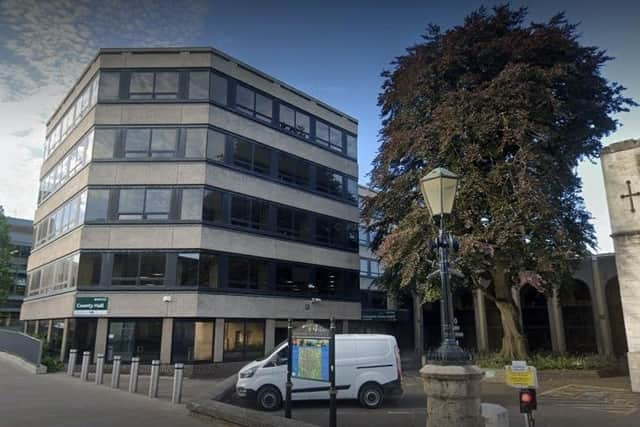

Oxfordshire County Council’s Lib Dem leadership has rebuked the decision, and the authority is lining up a legal challenge against the government plans while continuing to push ahead with unapproved plans to build a new council ‘campus’ in the centre of Oxford.
County leader Tim Bearder said he will respond to a government consultation on the implementation of the three-council plan by restating his case for the replacement of current authorities with one countywide council with increased powers.
The council had previously sent a legal letter to the government and issued a protective claim in court in relation to a potential judicial review of the local government reorganisation decision.
Mr Bearder said he is considering “legal options”.
On social media, county transport boss Gareth Epps went further, calling the situation “madness,” saying “we cannot let it happen” and “see you in court”.
Mr Bearder said: “I’m deeply disappointed that the government is minded-to press ahead with splitting Oxfordshire into three unitary councils, despite the serious concerns we have raised about the impact on public services, costs and accountabilities.
“We are told that this is an entirely new decision and that our previous legal action no longer applies. Instead we are now being asked to make our case all over again before ministers take a final decision.”
City Lib Dem leader Katherine Miles has described concerns about the three-council plan, explaining that “the new boundaries undermine the potential for efficiency gains by combining city and county functions” and “will lead to three of every public sector role such as director of social care”.
Oxford city leader Susan Brown (Labour) disagrees and shared concern about the county council spending public funds on a legal battle.
She said: “A different set of ministers have undertaken a full review of the proposals with fresh eyes and have come to the same decision for Oxfordshire and West Berkshire.
“That doesn’t surprise me as we have been clear throughout that the three unitaries proposal best meets the requirements both of local communities and of the Government’s priorities for housing delivery, economic growth and place-based reform of public services.
“The minister has published a detailed rationale for the decision which makes the same points.
“Therefore, I think rather than spend more public funds trying to fight the decision it would be best to help ensure the successful delivery of the new councils to benefit local residents, businesses and other organisations.”
The county does not support the inclusion of cash-strapped West Berkshire Council in the new Ridgeway council.
West Berks leader Jeff Brooks thinks an Oxfordshire legal challenge would fail.
He believes that “it is difficult” for the county councillors to “accept that their organisation will be abolished in the three unitary council solution.”
Mr Brooks believes the new council would simplify services and has a “thoroughly tested business case”, saying “I am very optimistic that any challenge will not be successful”.
While decisions on potential legal action remain in limbo, the county is continuing to press ahead with the building of its new council offices, assembly and meeting spaces, a coroner’s court and administration space at Speedwell House, just off St Aldates.
The council has repeatedly refused to declare how much it is spending on the project, which its leader admitted will likely be redundant under the three-council plan.
After being questioned on decisions to progress works without giving required notice to council, planning permission, or certainty about local government reorganisation (LGR), county finance boss Dan Levy said: “At the moment there is no indication that we will not be in our new home just in time to be abolished.”
The following questions were put to Mr Levy at full council on Tuesday, November 3.
County Green leader Ian Middleton asked: “As the cabinet has authorised construction of Speedwell House before the approval of a full business case, and given the continued uncertainty with LGR, can the member confirm whether that business case will be approved and how much public money will have been committed before that decision is made?”
Mr Levy said he could not give an “exact date” for the document which would justify the spending on the project but that it would be “soon”.
He refused to say how much money has been and will be spent but said it will be covered by the council selling off County Hall, where it is currently housed.
He claimed the money was “secure”.
The council sold off the building to an international investor, L&G, which has plans to transform the space into a hotel.
It will move out of the space next year, moving around temporary offices while Speedwell House is redeveloped.
Under current plans, the county council intends to move into Speedwell House in April 2028, a year before its planned abolition.
Councillor Brad Baines (Labour) asked how much money had been spent amid delays with archaeological finds, and having to find temporary accommodation.
Mr Levy also did not give a figure to this but said updated Speedwell House plans, made following an archaeological discovery which has delayed the redevelopment by a year, will cost less than previous proposals.
City and county councillor Susanna Pressel (Labour) questioned: “Is it not very risky to be ordering materials before we have planning permission?”
Mr Levy claimed that it was not “risky” and called for Oxford City Council to approve the new county hall plan.
Speaking at a meeting on October 20, where the county cabinet voted to start building at Speedwell House ahead of schedule, Mr Bearder said it would mean Greater Oxford would “have rather too many buildings”.
Under the government’s plans, Greater Oxford council will run the city and encompass villages and towns surrounding it, taking parishes from Cherwell, South Oxfordshire and the Vale of White Horse.
North Oxfordshire Council will cover the remainder of Cherwell, along with West Oxfordshire, and Ridgeway Council will take up South Oxfordshire, the rest of Vale of White Horse and West Berkshire.
Oxfordshire County Council was contacted for comment.