
Abolition of councils will ‘atomise’ Oxfordshire to favour the city, says senior county council figure
The abolition of councils will “atomise” Oxfordshire to favour the city, throwing residents “under the bus”, says a senior county figure vowing to fight a decision.
A long-fought power battle continues between the county and the city after a decision set to see an end to the current system of local governance.
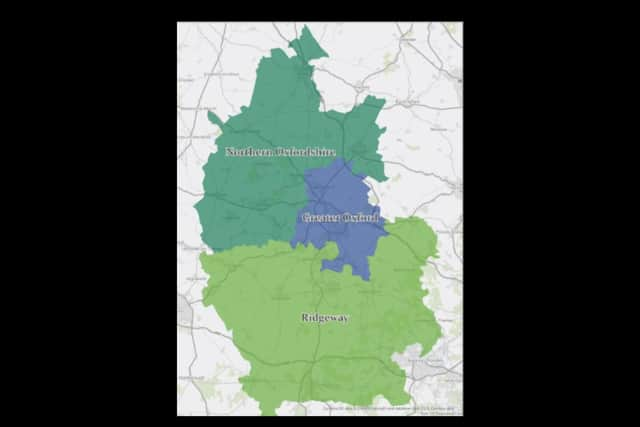

On Thursday, July 16, it was confirmed county, city and district councils will be wiped off the map in April 2028 and replaced with three new authorities – Northern Oxfordshire, Greater Oxford, and Ridgeway, which includes West Berkshire.
These organisations, known as unitary authorities, will take over and split up the county’s powers such as transport, potholes and social care, as well as city and district powers for planning, licensing and bins.
Announced by then Communities Secretary Steve Reed, who has since been replaced by Angela Rayner in Andy Burnham’s reshuffle, the redrawn map had been proposed by the current Labour-run Oxford City Council.
The Lib Dem-run county council is hoping this change presents an opportunity to “reverse the decision”, with leader Tim Bearder saying he wants to work with the new Prime Minister.
In a social media video, county council transport boss Gareth Epps goes further, saying “we won’t take this decision lying down”.
He expressed concerns about the decision-making process, sharing “suspicions” that the former minister made decisions over the heads of civil servant advice, saying “we owe it to our people to find out” and that the Lib Dems will soon be unveiling plans for their next steps.
A spokesperson for the Department for Local Government said: “All proposals were considered carefully, on a case-by-case basis, against our published criteria.
“No decisions were taken on a party political basis.”
With no legal option to appeal the decision, if the county intends to fight it, this would likely be through a judicial review.
Oxfordshire has not yet revealed if it will be taking on this costly process, but other county councils are said to be considering it following the July 16 reorganisation announcements.
This follows over 130 years of Oxford and Oxfordshire council power battle.
In 1889, an elected Oxfordshire County Council was created, and seven months into its existence the city was able to take back control into its own hands with ancient borough status.
It maintained this until 1974, when the current two-tier district system was created with the county gaining new powers over Oxford.
In 2003, a bid by the city to become a unitary authority was refused, as was a 2016 county proposal for a countywide unitary.
Last week’s reorganisation decision, selecting three new councils over the county’s singular Oxfordshire authority or district proposed two-authority plan, has been heralded as “historic” once-in-a-generation change by the current city council’s administration.
Reacting to the plans which, at this time are still set to go ahead elected officials, business owners and residents have shared fears about the expansion of the city into Oxfordshire’s green belt with the inclusion of 25 villages into Greater Oxford, the south of the county taking on West Berkshire’s £50 million Government debts, “gerrymandering” to favour Labour and splitting of services being financially unviable.
These criticisms have been refuted by the current city council leader Susan Brown (Labour) and the Government Department for Housing, Communities and Local Government.
Ms Brown said: “The Government’s decision to create three new councils to serve our geography will simplify local government, save money and keep decision-making local, so each area can shape services around the specific needs of its residents and businesses.
“I understand that leaders in some other councils are disappointed that Government didn’t accept their alternative proposals for local government reorganisation.”
She described Starmer’s Government as having taken six months to go through hundreds of pages of evidence and widely consulting before making its decision.
In his announcement Mr Reed had said: “Given the importance that the Government places on Oxford and its wider region for national economic growth, and the shortage of housing being a factor constraining that growth, my selected option performed particularly well due to the fact it clearly supports housing growth, reflects Oxford’s economic geography, gives the city a distinct voice within devolution arrangements, and enables place-based service delivery aligned with local needs.”
People living in villages set to become part of the Greater Oxford unitary have expressed fears about what this means for them.
Philip Hickman, 34, of Hickman’s Butchers, Wheatley, has concerns about the potential for new housing, saying “the infrastructure is not here for it”.
Donna Foster, 59, said “they’ll just take over the green belt”, calling the situation an “absolute disgrace”.
Those further south under the new Ridgeway Council combined with West Berks shared apprehension about multimillion-pound debts taken on by the Berkshire council over the last two years to avoid effective bankruptcy.
Mr Reed said: “I considered the expected costs and benefits set out in the proposals, as well as the ability of each new council to be financially resilient.”
Amid the new structures being created, there have also been calls for a “halt” to the county’s controversial transport plans by a campaign group representing local businesses, saying the authority should not “ram through” policies before its abolition.
On the flip side, active travel campaign groups are fearing for the county’s transport policies, questioning whether “countywide transport planning like the rail plan, A40 improvements, longer cycle routes and connecting the ‘Science corridor’” will still be able to go ahead under multiple authorities.
Ms Brown said a new Greater Oxford authority will still need policies to “tackle the severe congestion” faced by the city, and bringing together power under unitary could mean a speeding up of road improvements – for example with bin lorries identifying faults.
The three-council proposal explains services such as transport could in future be controlled by a devolved Thames Valley authority – although the creation of this has stalled after being vetoed by Oxfordshire County Council.
The formation of this could further change the way Oxfordshire is run, whether this was to come about before or after the new councils come in, as proposals say the new authorities “will form the foundations of a modern, connected region”, working with a future potential Mayoral Strategic Authority.
Achieving this new devolved authority will require the county, city and districts to come together, along with the councils of neighbouring areas, as unlike local government reorganisation, which can be pushed through by the Government, a new devolved power needs the councils it could impact to approve it.