
New research project offers fresh insight into Banbury's almost 250-year-old dockyard history
Researcher, historian and Tooley's Boatyard managing director Matt Armitage has completed a major research project into the nearly 250-year history of Banbury's famous canal boatyard.
For a long time, many of us thought we knew the history of Tooley’s Boatyard.
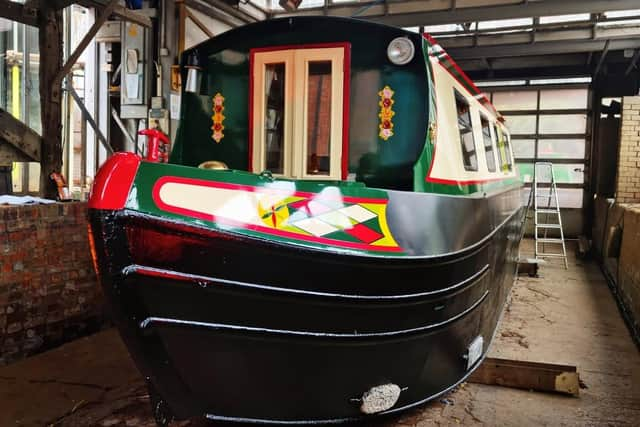

Certain names, dates and stories had been repeated for years through local memory, old publications and conversations around the canal. Some parts were absolutely true.
Others, however, became less certain once the records were properly tested.
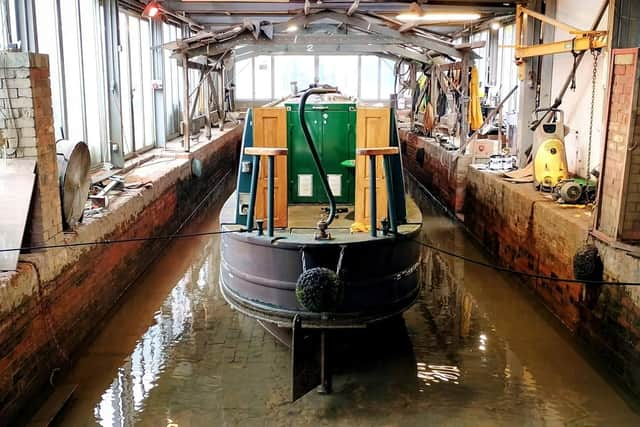
Over the past few years I have been carrying out a major historical and industrial archaeological research project into Tooley’s Boatyard, looking at nearly 250 years of the Banbury Dockyard’s history. The project has now been completed and submitted to Historic England.
The earliest confirmed evidence for operation at the dockyard currently dates to 1795, although the site almost certainly began functioning shortly after the Oxford Canal reached Banbury in 1778.
What began as a relatively small piece of research gradually developed into a much larger investigation involving newspapers, canal company records, archaeology, genealogy, census returns, maps and surviving structures within the dockyard itself.
As the research developed, forgotten operators began emerging from the records and parts of the accepted history started changing.
One of the most important lessons from the project was how easily an idea can become accepted as fact simply through repetition. A name appears once, another person repeats it later, eventually it finds its way into print and over time it becomes part of the accepted story.
That does not mean those earlier writers were wrong. In many cases they were working with limited information and did an enormous amount to preserve local waterways history.
What the research shows is that history is never completely fixed. New evidence can change how we understand the past.
One example involves an early dock operator referred to in parts of the accepted history as “Mr Evans”, who was traditionally believed to have been the first operator or owner of the dockyard shortly after the Oxford Canal opened in Banbury in 1778.
Despite extensive research, no documentary evidence for Mr Evans has currently been found within the surviving records.
That does not necessarily mean he never existed. Records are incomplete and many have been lost over time. It simply means that, at present, the evidence has not yet been located.
This raises an interesting possibility. There may still be people locally who hold photographs, documents, letters, family memories or information connected to the dockyard and its operators which have never been publicly recorded.
The research traced the dockyard through generations of operators including Thomas Cotton, the Roberts family, William Chard, J. H. Neal and the Tooley family, while also examining how the physical site itself survived changing trade, industrial decline and redevelopment pressures.
What became increasingly clear during the project was that Tooley’s is important not simply because of its age, but because of continuity.
Across Britain, many historic industrial and waterways sites closed during the twentieth century. Once that happened, the practical skills connected to them were often lost as well. In many places today, heritage skills have had to be revived or reconstructed after generations of absence.
At Tooley’s, however, the working chain was never completely broken. The dock kept operating. Stop planks continued being dropped into place. Boats continued entering the dock for repair.
The forge continued working. Skills continued passing from one generation to another through everyday practical use rather than later reconstruction.
That makes Tooley’s extremely unusual. The dockyard is not simply a collection of old buildings. It is a rare surviving industrial landscape where historic working practices continued long enough for traditional skills and knowledge to survive into the modern day.
This continuity is one of the reasons why the site is so historically important. The research also highlighted the survival of several rare heritage crafts connected to the dockyard.
Two of these appear on the Heritage Crafts Red List of Endangered Crafts, which identifies traditional skills considered at risk of disappearing within the UK.
Roses and Castles canal decoration, once seen across the canal system, now survives in only a very small number of practitioners.
Traditional wooden narrowboat building and repair has also dramatically declined as historic wooden carrying boats disappeared from the waterways.
Traditional blacksmithing connected to canal repair work also survives at Tooley’s through the continued use of the forge and the practical needs of maintaining working boats and historic equipment.
What makes this particularly significant is that these skills survived in Banbury through continuity of use rather than revival after closure. In many parts of the country, such traditions disappeared entirely before later attempts were made to recreate them. At Tooley’s, elements of that working culture simply continued.
The survival of these skills is not only about the past. Earlier this year, Tooley’s apprentice Jacob successfully completed his training and the dockyard is now hoping to take on a new apprentice based at the historic dry dock.
Continuing this chain of training is an important part of the dockyard’s future. At many historic industrial sites, traditional skills disappeared when the original working environment closed.
At Tooley’s, however, practical knowledge is still being passed on within the same working dockyard where generations of boatbuilders, blacksmiths and
waterways craftsmen worked before.
The research project highlighted that preserving historic buildings alone is not enough. Without continued opportunities for training, practical work and public engagement, many traditional skills remain vulnerable despite surviving for generations.
While apprenticeship schemes provide an important starting point, some endangered heritage crafts and specialist waterways skills remain difficult to sustain without wider support and long-term investment.
Ensuring that these rare traditions continue into the future remains one of the dockyard’s greatest challenges.
At Tooley’s, the dock still operates, the forge still works and traditional skills are still being learned within the same industrial landscape where they developed over centuries.
That continuity very nearly came to an end in 2019 when the future of the site became uncertain and closure was a real possibility, although this was not the first time the dockyard had faced serious threats during its long history.
Today, with the creation of Tooley’s Boatyard Trust and the securing of a 150-year lease, there is now a genuine opportunity not only to protect the buildings themselves, but also the working traditions, practical knowledge and heritage skills connected to them.
Perhaps most importantly, the research also shows that the history of the Banbury Dockyard is still not completely finished. There are still unanswered questions, missing records and stories waiting to be discovered.
If any readers have photographs, documents, memories or information connected to Tooley’s Boatyard, its workers or its operators, I would be very interested to hear from them.
Anyone interested in learning more about the history of the dockyard is also welcome to visit Tooley’s Boatyard, explore the museum, take a guided tour and experience the site from the water on one of the boat trips.
For more infromation, visit: https://tooleysboatyard.co.uk/