
AI and outsourcing are creating hidden security risks for UK micro businesses, warns operations expert
As more UK micro businesses combine AI tools, freelancers, outsourced and offshore support to run leaner operations, a local Banbury expert is warning that fragmented systems and unclear accountability are creating growing security, compliance and operational risks without clear governance that could prove costly to reverse.

According to the British Chambers of Commerce, more than half of UK firms are already using AI tools, with adoption accelerating across smaller businesses. At the same time, the Federation of Small Businesses estimates that around 75% of UK private sector businesses now operate with no employees, reflecting the continued rise of solo and founder-led businesses.
Despite making up most UK private businesses, micro firms are often grouped into broader SME discussions despite operating very differently.
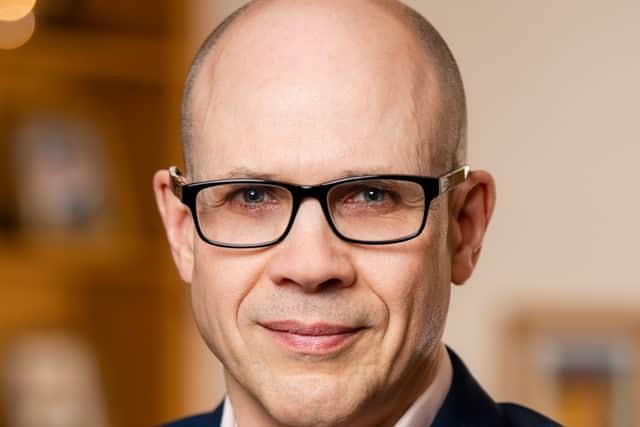
Richard Colligan, founder of Banbury-based Oneresource, and a specialist in micro business operations, says many business owners are building entire operating models around disconnected platforms, outsourced providers and AI tools without fully understanding where accountability sits when something goes wrong.
“Micro business owners are no longer just outsourcing admin tasks,” says Colligan. “They’re piecing together operations across AI tools, freelancers, external and overseas providers, but many have no clear structure behind how those systems and processes interact.”
“A founder might be using AI for customer communication, a VA working on cloud-based financial software without insurance for AML compliance, a freelance social media manager operating on Windows 10 (now unsupported by Microsoft) and multiple disconnected systems without stopping to ask who is actually accountable for IT security, compliance or operational oversight.”
Colligan says the trend is being driven by the pressure on solo founders to reduce costs while managing increasingly complex businesses alone.
“With more founders operating without employees, people are trying to create lean, scalable businesses with minimal overhead,” he says. “AI and outsourced support absolutely have a role to play, but they don’t remove accountability.”
The risks are particularly acute around:
customer data (GDPR) particularly where information is entered into AI tools
bookkeeping (AML compliance)
financial handling processes where systems rely on multiple third parties
operational continuity
IT security (device standards, access controls and credential management)
cybersecurity awareness (phishing, payment diversion fraud, ransomware and emerging AI threats)
VA structural accountability (employed vs freelance, franchise or offshore models)
Oneresource says it has observed cases where micro business owners have fallen victim to invoice redirection scams, hacked business accounts and lost credentials to outsourced social channel management - incidents that have resulted in significant financial losses and weeks of operational disruption.
Keith Hickson, a seasoned Information Security and Data Protection Consultant and Director of KH InfoSec Ltd, said:
"I see that AI adoption in micro and small businesses is moving faster than governance. Staff are using tools they haven't been trained on; sensitive data is being processed by systems nobody has vetted, and the business owner has no visibility over any of it. When something goes wrong such as: HR data exposed by AI enabled search, misinformation given by a chatbot, an AI generated report with false data or a new AI tool processing Personally Identifiable Information (PII) beyond the scope of the company’s privacy policy, there is often no clear process to deal with it and no defined accountability.
“The message to business owners is clear: 'AI did it' is not a defence. If you deploy it, you own it."
Colligan adds: “What starts as a way to save money can quickly turn into something that’s hard to control,” Colligan says. “When support is fragmented across different freelancers (either based in the UK or worse overseas), platforms and AI tools, business owners can lose visibility and control very quickly.”
The issue is particularly challenging for micro businesses because there is rarely an internal team to absorb mistakes or manage fallout from operational failures.
“In larger businesses, there may be some layers of oversight which even then may break down,” he says. “In a micro business, one mistake can stop operations entirely.”
Colligan believes many founders underestimate the hidden management burden created by disconnected systems and outsourced support models.
“AI can generate outputs, but it doesn’t create accountability,” he says. “Micro business owners still need clarity on who handles their data, IT security, how financial processes are managed and who is responsible when something fails.”
He argues the issue is not AI or outsourcing itself, but the lack of operational structure surrounding how they are implemented with accountability.
“Most business owners are not looking to build complicated management structures,” he says. “They want reliable support that reduces pressure without introducing additional operational risk.”
As AI adoption accelerates and solo entrepreneurship continues to grow, Colligan believes the conversation is shifting from whether businesses should use AI and outsourced support, to understanding how these models are managed safely and sustainably.
“Most founders don’t realise how fragile these operational setups can become until something breaks,” he says. “For a micro business, one mistake doesn’t just cause disruption: it can stop the business completely. Structure, continuity and accountability are not premium add-ons. They should be the baseline.”