
‘Green’ is the new glamour: Banbury homes join trend towards eco upgrades
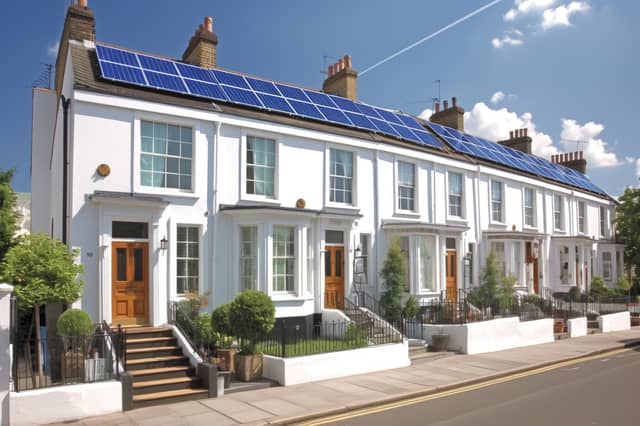

New surveys show that eco upgrades are now seen as stylish and meaningful, not just practical. Find out what Banbury home owners think.
In a 21st-century twist on the old adage of ‘keeping up with the Joneses’, a fresh survey commissioned by Skipton Building Society reveals that British home owners are increasingly viewing environmentally conscious home improvements as modern status symbols – especially when it comes to renewable technologies like solar panels, underfloor heating and heat pumps.
What the research unveils
Based on responses from 2,000 UK home owners, the survey undertaken by OnePoll found that 47% now consider eco-friendly upgrades as true markers of success – on par with, or even overtaking traditional aesthetic renovations.
Meanwhile, cosmetic makeovers such as new kitchens (48%) and bathrooms (39%) remain popular – but energy-efficient improvements are catching up fast. Some of the stand-out findings include:
- 48% have considered solar panel installation.
- 28% see underfloor heating powered by renewables as a prestige feature.
- 25% regard having a heat pump as a modern upgrade.
The accompanying Big Retrofit case study features a 1930s detached house transformed to boost its EPC rating from D to B through solar panels, heat pumps, triple glazing and insulation – underscoring the practical as well as aspirational side of green retrofitting.
What this means for Banbury
Much of this move towards environmentally conscious home improvements comes from the “neighbour effect”: 28% of respondents knew someone who’d made a green upgrade – and 53% of those felt inspired to follow suit.
Earlier this year, a village near Banbury became one of the first in Oxfordshire to trial a council-backed solar scheme: Residents had panels fitted at no upfront cost and, for a £40 monthly fee, benefitted from battery storage and maintenance – saving around £300 a year on energy, according to early participants.
In practical terms, local installers report major success stories. A newly built Banbury home reduced grid usage by over 80%, produced over 5 MWh of clean electricity and used 98% of generated power in-home, with batteries supplying 78% of peak usage. Another case study highlights how a Banbury household’s solar installation saved 261 kg of CO₂ emissions – equivalent to planting 16 trees.
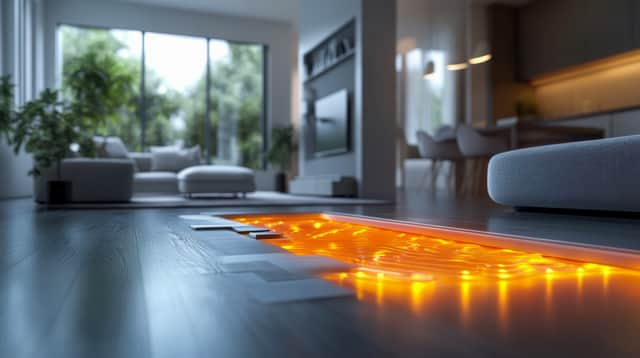
Underfloor heating is also gaining ground. Nationally, the Skipton Building Society survey found that 15% of homeowners have already installed underfloor heating and a further 20% plan to add it within the next five years. The growing market, worth approximately £213 million in 2024 and teetering towards £226 million in 2025, underscores its increasing appeal.
Local plumbers and heating engineers have also reported a noticeable rise in retrofitting projects, particularly in home extensions and open-plan kitchen-living spaces, where the system’s even heat distribution and energy efficiency are especially valued. Water-based systems, which pair well with heat pumps, dominate new-builds, while electric systems are gaining traction in renovations due to their ease of installation. Underfloor heating systems are estimated to be around 25% more energy efficient than radiators and early adopters in Banbury have noted bill savings of up to £350 per year.
When it comes to heat pumps, the data reveals growing momentum. Nationwide, certified installations are surging. In September 2024, over 42,000 were installed, marking a 39% monthly increase year-on-year. Yet challenges remain. Gas boilers still outnumber heat pump installations by 15 to one, and only 13% of new UK homes were built with heat pumps last year.
What residents are asking – and why it matters
Home owners are increasingly asking:
– “Is now a good time to make the switch?” Falling costs, government incentives, and high energy prices make installation of eco-conscious improvements both economically and environmentally compelling.
– “Will I be adding value to my home?” Evidence suggests that yes, this is the case. Some homes in the area experienced a 4% increase in property value post-installation of solar panels and making your home more energy efficient and increasing your EPC rating can add a whopping 14% according to http://www.moneysupermarket.com/.
But beyond financial and environmental benefits, the survey also indicates an intangible: Eco-upgrades are now seen as stylish and meaningful, not just practical.