
'You'll miss us when we're gone'. Oxfordshire's eye hospital at risk because of uncontrolled private operations
Those with sight-threatening eye conditions may lose access to Oxfordshire's eye hospital because government ‘choice’ policy has led to runaway use of private cataract ops.
Health companies seeking profits from easy procedures are taking advantage of rules that force local NHS managers to pay for unlimited cataract operations, no matter where the patients have their procedures.
The huge number of procedures being done in NHS-funded clinics in Oxfordshire are taking activity from Oxford Eye Hospital. And with the subsequent loss of income and training opportunities, the unit is becoming unviable.
Eye emergency expert Stella Hornby told councillors that unchecked growth in private cataract surgery was diverting funds, impacting staff and jeopardising training and emergency services in Oxford.
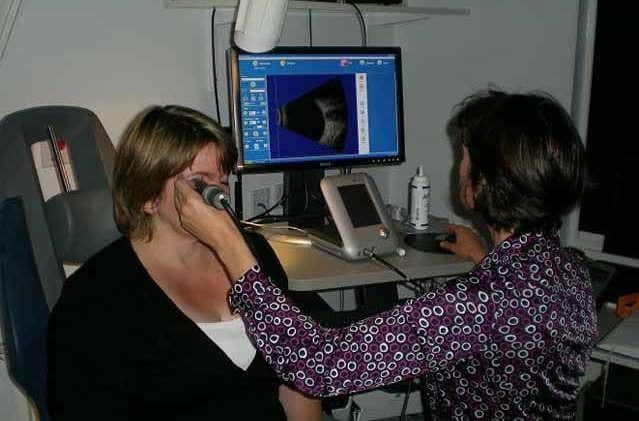

She called for an urgent review of profit-seeking company involvement in order to protect the eye hospital’s future.
Speaking at last month’s Oxfordshire Health Overview and Scrutiny Committee she said postponing a cataract operation did not make a difference to the outcome, where delays to treatment of serious eye disease can result in permanent blindness.
"Ther is no cap on the number of cataract operations done. It's a blank cheque and it could easily bankrupt not just ophthalmology but other specialties as well,” she said.
"People who go blind get depressed, fall over more, lose their jobs, have to be looked after by someone else and lose their independence.
"In the eye hospital, we provide seven-days-a-week emergency care. We're integrated with the whole of the JR hospital. In the past, we used the tariff for cataract surgery to subsidise the less profitable bits of ophthalmology and other parts of the Oxford University Hospitals.
“If you hive off the profitable bits (and the private sector only wants to do profitable bits) the rest becomes financially unsustainable. We've already had theatres taken away from ophthalmology. We've had budgets reduced. We've lost staff and waiting times for other eye surgery have gone up.
"If you need a general anaesthetic for your cataract, that waiting time is now very long. It's also leading to difficulty recruiting and retaining staff. It is impacting training.
“All the (private) providers have asked me to arrange to provide emergency care for their patients seven days a week. But in the long run, you can't have an A and E without a hospital,” she said.
"I couldn't run an eye emergency service without the staff and the rest of the hospital. We see 120,000 outpatients a year, do thousands of operations. We have an A&E so it's like a mini hospital within a hospital. And we also do lots of training and research.”
Ms Hornby asked the committee to support the Royal College of Ophthalmologists’ (RCO) concerns, calling for an urgent review.
"Otherwise, I think the rest of the system will miss us when we're gone,” she said.
Joan Sewart of Keep Our NHS Public Oxfordshire (KONPOx) shared concerns that NHS eye departments are under-resourced, risking patients’ sight. She criticised the impact of private providers on the Oxford Eye Hospital and backed the RCO’s call for action.
She said the BOB Integrated Care Board, which spends NHS money in Berks, Oxon and Bucks, admitted that private providers have had a destabilising effect on the Oxford Eye Hospital. “But still privatisation goes unchecked,” she said.
"Now there are even more private companies keen to profit from our NHS, offering more than cataract surgery, offering glaucoma care.
"Cataract waiting lists may be falling, but diverting funding, workforce and infrastructure into the private sector and away from resourcing the huge range of eye care services provided by NHS hospitals throws the whole system out of balance and is a major threat to their survival,” she said.
"Nearly 1 in every 2 pounds of the £14 million spent by BOB ICB commissioners on private cataract clinics in 2023/24 was diverted to shareholder profits and debt repayments. Money that should have been spent on protecting NHS eye services at the JR.
“Private cataract companies drain even more funding from the NHS, despite not having a contract with the BOB ICB. Under patient choice regulations, non-contracted activity saw 15% of the ICB eye care budget transferred to the coffers of private health companies, and away from sustaining vital services at our NHS eye hospital.”
Matthew Tait, ICB Chief Delivery Officer said: “There is a number of private providers across a number of NHS services across a range of specialties. That is the model we have in this country. We commission both private and NHS healthcare to serve our population, it is important to understand the choice agenda on that, and the right individuals have to choose where they go and the way the market is managed.”
The ICB said private providers are subject to NHS standard contracts and accreditation checks, with quality being monitored.
However, when the ICB does not hold a direct contract, oversight is weaker and there is no systematic way for NHS hospitals to report or track complications arising from private providers’ work. The ICB is limited in how much it can do because of government policy on choice.
KONPOx is urging all residents of the county to write to their MPs calling on them to help protect Oxford Eye Hospital. A template letter is available on the campaign group’s Facebook page along with email addresses for the county’s MPs.
In it Professor Ben Burton, President of The RCO says: “While additional [private] capacity has helped bring down cataract waits, we have serious concerns about the unintended consequences. Investing so much scarce resource into treating cataracts – a reversible, relatively low-risk condition – in the independent sector has led to funding, workforce and infrastructure being diverted here at the expense of resourcing for conditions such as glaucoma that, while being more complicated to treat, can cause irreversible sight loss if not treated swiftly,” he said.