
Banbury area rivers have 'higher agricultural than sewage' pollution
Rivers in the Banbury area appear to be higher in agricultural run-off pollution than sewage, according to a new report.
Samples taken from the Cherwell and Ray rivers were polluted with high nitrate but less phosphate. Nitrate in rivers comes mainly from run-off from agricultural fields, whereas the majority of phosphate comes from sewage (treated and untreated).
The new information comes as Thames Water has delayed Banbury area sewage treatment upgrades due to its dire financial state.
The samples were taken by a team of 50 volunteer ‘citizen scientists’ who collected 560 river water samples and tested them for those key pollutants - phosphate and nitrate. Phosphates and nitrates are nutrients that can cause algal blooms which starve the river of oxygen and degrade the river quality.
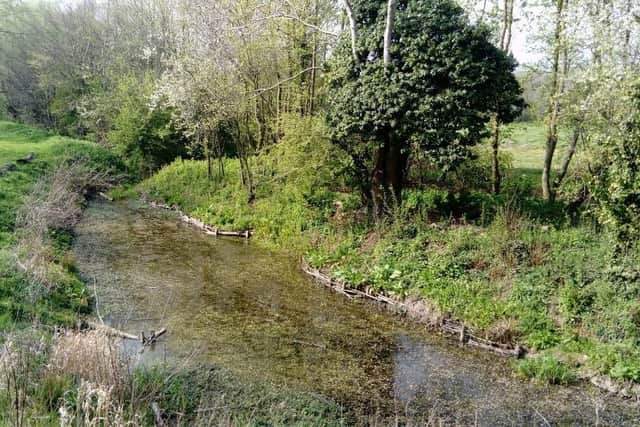

The water quality data has been collected over the past 18 months and is being used to clean up the Rivers Cherwell and Ray and their tributaries around Banbury, Bicester and Oxford.
Last week, the results from this testing effort were presented in a new report written by Thames21.
It found that 90 per cent of samples taken from the Cherwell and Ray rivers were polluted with high nitrate, whereas only 29 per cent of samples had high phosphate.
The report also highlights that eight sewage treatment works have had upgrades delayed to post-2025 by Thames Water, due to the company’s poor financial situation. These works are due for: Banbury, Boddington, Hook Norton, Kings Sutton, Middleton Cheney, Marsh Gibbon, Shutford and Weston-on-the-Green. The report also recommends Charlton-on-Otmoor treatment works is investigated due to evidence of high pollution downstream.
Claire Robertson, who works for environmental charity Thames21 and wrote the report, said: “The number of samples the volunteers have collected is absolutely amazing and I want to extend a huge thank you to them. Citizen science allows us to test things the Environment Agency doesn’t, such as nitrate, and in places where there hasn’t been testing before”.
“Although the report paints a sobering picture of our local rivers, there are many actions we can take, both small and large, to make them healthy again. For instance, bin wet wipes, grease and other ‘un-flushables’ and make sure chemicals are disposed of correctly and not down the drain – the waste wizard is a great website to check if you’re not sure.
“If you’re a landowner, there are many paid opportunities to reduce run-off into waterways. Planners and politicians should make sure that increasing the capacity and efficiency of local sewage treatment works is a pre-condition of any housebuilding. If you want to get involved or have ideas of your own, please email [email protected] mentioning ‘Cherwell and Ray’ in the subject line.”
Only one of the 35 assessed waterbodies reaches ‘good ecological status’ according to the Environment Agency with the predominant reason for failure being the water industry (44 per cent) followed by agriculture (31 per cent) and physical modifications (15 per cent). Only 24 per cent met good status for phosphates.
Citizen scientist tests were more positive about phosphate with 71 per cent ‘clean’. However 90 per cent of sites showed evidence of some nitrate pollution with 53 per cent being ‘highly polluted’.
To read the report see here.