
How 17th century women groomed themselves for courtship and marriage - a Banbury lecture
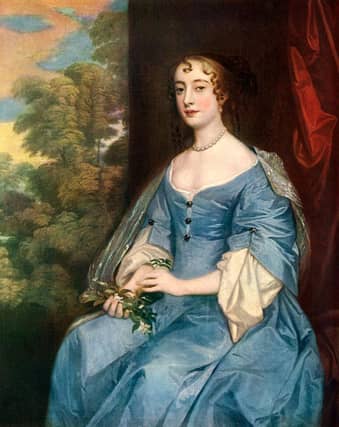

The fascinating subject of how women of the middle and upper classes groomed themselves in preparation for courtship will be discussed in a lecture in Banbury next week.
Banbury Historical Society will welcome Dr Tim Reinke-Williams on Thursday (October 10) who will be talking about Physical Attractiveness and the Female Life-Cycle in Seventeenth-Century England.
This talk focuses on how women of the aristocracy, gentry and middling-sorts in seventeenth-century England conceptualised their own physical attractiveness and that of other women.
Diaries, letters, autobiographies and portraits will be used to show how women sought to present themselves. The importance of good looks increased during adolescence and once women reached an age when they were expected to marry.

How women sought to maintain an age-appropriate but attractive appearance as they passed through middle and into old age will be discussed too.
Dr Reinke-Williams is a Senior Lecturer in History at the University of Northampton and a Fellow of the Royal Historical Society. Tim researches gender, work and the body in Britain, in the period c1500-1750, and is the author of Women, Work and Sociability in Early Modern London (Palgrave, 2014).
He has published articles in leading peer-reviewed academic journals, including Continuity and Change, Cultural and Social History, Gender and History, History Compass and Social History.
Lectures take place in the Education Studio of Banbury Museum, but it will also be possible for people to watch this at home, by signing in with Simon Townsend ([email protected] ). Non-members are very welcome: they can receive one lecture free but will then be invited to pay per screening or to join the society.