
Councillors clash over ‘contradictory’ building target for thousands of homes in Oxfordshire
The Government cannot “keep ignoring” the “contradictions” between housing targets and infrastructure, after the building of more than 12,500 homes in Oxfordshire since 2022.
Following a heated debate at the county council, the authority has passed a motion calling on central government to match targets with “genuine infrastructure capacity” amid sewage spilling out of drains and unmaintained roads.
The proposal was approved with cross-party support from Tories, Lib Dems, Greens and Independents, while some Labour representatives described it as “NIMBY”.
According to housing data released by the Government last month, each district council met or exceeded its housing target in 2024, with thousands of homes being delivered, but the Labour-run city council only built 65 per cent of its required properties.
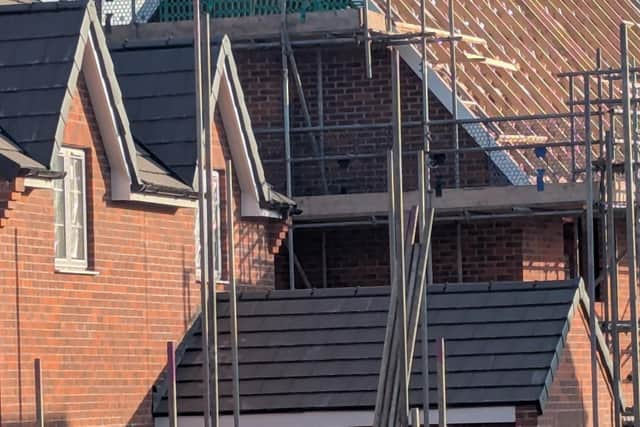

This has placed a special measure called ‘presumption’ on Oxford, which calls on the authority to push through developments without delay if they meet policy criteria.
Between 2022 and 2025, the Vale of White Horse district has seen 3699 homes delivered, South Oxfordshire 3115, Cherwell 2890, West Oxfordshire 1771, and Oxford 1099.
South and Vale by far exceeded their targets, of 1825 and 1922 homes respectively, by the end of 2025.
Now, the county council, which holds responsibility across infrastructure areas such as in flooding and highways, has said “roads, water, sewerage and electricity capacity often fail to keep pace” with the housing growth.
The council did this by passing the motion put forward by Green councillor Emma Markham, which said: “Developers also frequently build infrastructure, including roads and sewers, which are never formally adopted by the Highway Authority or water company, leaving residents reliant on unmaintained systems with no clear responsibility for upkeep.”
It adds: “This council has statutory responsibilities over important infrastructure considerations such as flooding and highways, but we should also be representing residents’ serious concerns over national planning policy to ensure timely provision and adoption of local infrastructure.
“This council believes that government cannot keep ignoring contradictions between housing targets and infrastructure capacity.
“This impacts new and existing communities and undermines the credibility of planning decisions.
“We should also consider more robust mechanisms to ensure adoption standards, safety audits and materials.”
Ms Markham, who represents Shrivenham, said: “The village I live in has doubled in size over the last decade.
“Yet, the infrastructure has failed to keep pace.
“The sewage treatment works built in the 1960s cannot cope with the increased demand, overflows into the local stream occur regularly, affecting businesses, residents, and the local environment.
“Thames Water has acknowledged the infrastructure in the area cannot accommodate additional growth.
“This is not about opposing housing – it is about ensuring that infrastructure is delivered when and where it is needed for both new and existing communities.”
County Green leader and Cherwell councillor Ian Middleton called sewage the “clearest example of the gap between political ambition and the practical reality”.
He added: “People are far more likely to support new housing when they can see that schools, roads, health services, electricity, water, and sewage have been planned honestly and funded properly.
“Housing targets must be matched by infrastructure targets.
“Utility capacity must be assessed early, transparently, honestly, and locally.”
Labour councillor Izzy Creed slammed the motion saying it was “really is about trying to reduce the housing target for Oxfordshire”.
She said: “It’s the Greens targeting their NIMBY voters.”
Ms Creed added: “While it doesn’t fundamentally say we don’t want to build more houses, it basically does by saying, ‘oh, we need to review the housing numbers based on infrastructure’, but how can you say that when you know that there is a housing crisis.”
Labour city and county councillor Susanna Pressel implored the council to vote against the motion.
She said: “If you are comfortably housed and ask yourself, do you have a roof over your head? Do you have a bed to go to sleep in?
“If so, please pause before you vote in favour of any reduction in the targets for housing being built because we desperately need more housing. Now, of course, the new housing needs infrastructure.
“That’s absolutely obvious. But it doesn’t need the infrastructure to be built before the housing or even while the housing is being built.”
She said the conditions that planning authorities are able to place on approvals can ensure housing cannot be occupied until the infrastructure is in place, without holding up building.
Conservative county and South Oxfordshire councillor Ian Snowdon raised the “scandal” of Great Western Park, where there has been a row between developers, Taylor Wimpey, and district council amid unfulfilled planning conditions and delayed infrastructure.
He said: “I have spoken once or twice in this chamber about what I consider the scandal of Great Western Park infrastructure adoption and SODC.
“Years after the development was completed, we still don’t have a single road in my division adopted, not a single street light, and when sewers are blocked, the stench is unbearable.”
When a road is not ‘adopted’, it is not maintained by a council.
This can be because it has not met the standards required by the authority in a legal agreement.
Mr Snowdon said: “They’ve sold all the houses, so they don’t really care anymore.
“Residents pay full council tax, yet when there’s a problem with the road, the street lights, the drainage, they can’t contact Fix My Street.
“Responsibility still sits with the developers rather than the council after some of them have been living there for over 15 years.”