
As Banbury's coffee factory prepares for closure - we take a look back with Brian Little to GF's move to Banbury
With the news that JDE Peets – first known as General Foods – is to close our iconic ‘coffee’ factory, we take a look back to the 1960s when GF moved to Banbury.
The feature below was written by Brian Little in 2013, as part of his popular Nostalgia page in the Banbury Guardian. It is the first of four articles we are reproducing to look back on a factory that became a Banbury landmark.
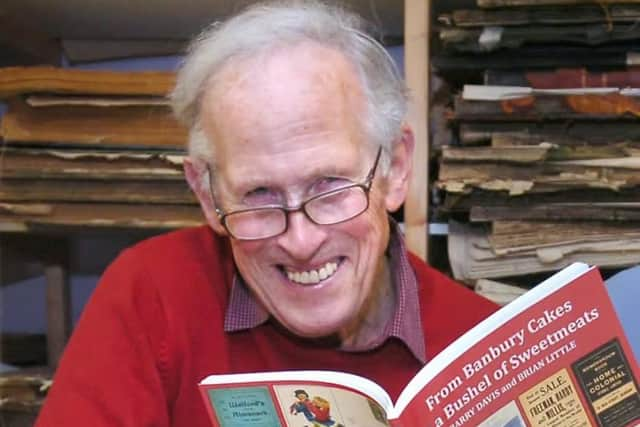

Local historian Brian was reflecting on the move to Banbury from Birmingham by General Foods – a decision made in 1963 – the year US President JF Kennedy was killed, the Great Train Robbery took place, Martin Luther King delivered his I Have a Dream speech and the year The Beatles hogged the charts. The factory was opened in 1964.
In the postwar south Midlands, Banbury was a small market town of around 22,000 people. It was a bold step to build a large factory on cornfields and lure hundreds of people from their Birmingham and London homes to live and work here.

Brian Little wrote:
When Cllr John Ryan became mayor of Banbury in May 1963 the Banbury Guardian used as a caption his key comment, ‘This is a vital year for Banbury’.
It is 50 years since certain vital decisions and courses of action followed which led to the move to Banbury by Alfred Bird & Sons of Deritend.
The reason Cllr Ryan made this remark was that, despite government pressure on firms to relocate to a Development Area, most of which were in the North West and Wales, the General Foods Corporation of the United States (owners of Birds) chose a 31-acre site at Banbury – because it was not remote from Birmingham, would allow consolidation of existing operations and permit new product line growth.
Buoyed up by the opportunities of the time, the company promised work for all employees willing to move to Banbury. Their aim was to foster an interest in the town and the concept of relocation so that in the end, those who worked in Birmingham would develop a commitment to the move.
Between July and September, 1963, coaches were laid on to tour the town and district. Coincidentally, Deritend workers received company bulletins and pamphlets that cast a spotlight on the town. There would also be limited opportunities for those Londoners still seeking houses under the overspill agreement.
Even more information was forthcoming when Cllr Ryan triggered the start of the work on a cornfield near Ruscote Avenue. He drove a 25-ton bulldozer and commenced levelling.
This was quite an experience for the mayor, who admitted that a day earlier he had had a secret trial run - a wise move as the members of the Banbury Development Committee watched the machinery with interest.
A matter of hours after this, the occasion was recounted in a letter to Deritend workers, all made possible by Paper and Publications, printers of the Banbury Guardian. Incredibly, and by reason of an outgoing post at 8pm, they got next day delivery.
Receptions of one sort or another were also significant events in spreading the word. In mid June 1963 there was a special luncheon for local civic dignitaries. The Chairman of the General Foods Corporation made it quite clear that the company had no preconceived ideas of a Big Brother attitude, but instead would pay play a full part in Banbury affairs.
After the mayor's exploits with the bulldozer. Mr C D Lovell, General Foods Managing Director, told a gathering at the Whately Hall hotel that Bird’s would introduce ‘just the right type of balance Banbury needs in its industrial development’.
This became clearer in editions of Banbury News, a General Foods publication. Each issue carried items about the factory, housing, schools and jokey cartoons, courtesy of the pen of Frank Toole, an artist technician.
If Deritend workers also read the Banbury Guardian, they may have been left rather disconcerted by a letter to the editor that appeared on September 5. It was from Ex-sub Officer at Banbury and read ‘yet apart from chasing leather all over a grassy field, yelling, ‘howzat’, propelling woods along a grassy sward and hurling a nifty dart, our good friends from Brum will find precious little else. I haven't in the past two years anyway’.
Fortunately, a different opinion came courtesy of a Guardian editorial: ‘But for a small town of 20,000 people, there is a remarkably wide range of activities and amenities to cater for almost every taste’.
The spirit of this was then enhanced by Birmingham Council, who made a commitment in early October to give their verbal approval of the overspill scheme, and also paid 25 pounds per house, per year over a 10-year period,
‘Workers on the Move’ – a sociological study of General Foods and its approach to a mass movement of labour contains a definitive statement about the 1963 situation.
Michael Mann writes, ‘Bird’s most important personnel problem was not how to run two factories at once for a short period of time, but how to transfer a workforce adequate for many years to come’.
- Brian Little was a former teacher at Banbury and Bicester College. He was a family man who was well known in the town. Brian moved to Banbury to work at the college, then called Banbury Technical College, in 1961, going from geography teacher to Head of Department before retiring in 1994. He was a Banbury borough councillor for four years in the 1970s, a warden at St Hugh’s Church for 20 years and chairman of Banbury Historical Society. He wrote six books, mostly on Banbury history.