
Some improvements in JR maternity but 'some safety concerns remain', say inspectors
Quality inspectors have seen some improvements in the JR maternity services but 'some safety concerns remain'.
The Care Quality Commission (CQC) has published reports on care provided in the maternity departments at Horton, Banbury and John Radcliffe, Oxford following recent inspections.
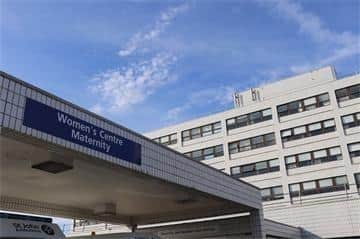

Both units have been rated as good with some improvements found since CQC’s previous visits, but some safety concerns remain at JR, the CQC says in a press statement today.
The JRadcliffe Hospital is the Oxford University Hospitals Trust’s main maternity site. The Horton provides a midwife-only maternity alongside a range of acute services.

The CQC carried out the inspections to assess the progress of improvements it told the trust to make at previous inspections and to follow up on concerns about maternity care raised by people, families and external partners.
The JR was included in an inquiry into 12 hospitals’ maternity services, following reports of deaths and birth trauma among mothers and infants. The National Maternity and Neonatal Investigation is being run by Baroness Amos, who is due to publish her report and recommendations later this month.
The CQC said today (Thursday) that maternity services at JR have been rated as good overall. Safe was rated as requires improvement. Effective, caring, responsive and well-led have all been rated as good.
The CQC found breaches across four regulations relating to safe care and treatment, environment, infection prevention control, staffing and good management of the service.
The Horton’s maternity services have been rated good overall and good for being safe, effective, caring, responsive. Leadership has improved from requires improvement to good. The overall rating for the Horton General Hospital has now been upgraded from requires improvement to good.
The overall rating for John Radcliffe Hospital, and the Trust as a whole, both remain ‘requires improvement’.
Amanda Williams, CQC deputy director of hospitals, secondary and specialist care for the South-East, said: “When we inspected maternity services at both JR and Horton hospitals, it was encouraging to see some improvements had been made. We found services delivered by caring and supportive staff who treated women as individuals, involving them in decisions about their care.
“There was a clear commitment to reducing inequalities with outreach services including a monthly clinic specifically for vulnerable migrant women and specialist teams providing support for women with mental health needs.
“It was also encouraging to see processes had been strengthened to improve how the service learned from incidents to inform future staff training programmes.
“However, JR was a busy unit operating under significant pressure and systems to keep women and their babies safe didn’t always work consistently well under that pressure.
"As a result, women weren’t always triaged in a timely way and staff didn’t always have a line of sight to observe women at high risk. While medical cover between 7pm - 8am was provided by the on-call team, there was no dedicated cover on the Maternity Assessment Unit. We saw one woman leave without being seen as a result.
“At the Horton, we found some of the same issues we flagged at our previous inspection. However, leadership had full oversight of the issues we had identified previously and were on a journey of improvement.
“Leaders acknowledged areas for improvement across both hospitals and knew they needed to tackle and embed them with more urgency.
“Staff should be proud of the progress they’re making and we will continue to monitor the trust to make sure women and their babies are safe while these improvements take place.”
At the JR inspectors found:
- Leaders did not report all delays in induction of labour as incidents; they recorded only 32 cases, while 206 delays over 24 hours were identified through NICE Red Flag monitoring, as they did not treat all Red Flags as meeting the threshold for incident reporting.
- Staff did not triage women within the nationally recommended 15-minute time frame, with only 36% assessed on time, leading to delays and an increased risk of undetected deterioration.
- Leaders required community midwives to cover overnight hospital shifts after completing full day shifts, meaning some staff worked for more than 24 hours, increasing the risk of fatigue-related errors.
- Leaders failed to ensure adequate staffing and capacity, resulting in bereaved women being cared for in environments that did not meet required standards for privacy, dignity, or national guidance.
- Leaders failed to ensure women experiencing pregnancy loss were consistently cared for in appropriate bereavement environments, with capacity and staffing pressures resulting in some women receiving care in areas that did not meet standards for privacy, dignity, or national guidance.
Inspectors also found that staff understood duty of candour. They were open and transparent and gave patients and families a full explanation when things went wrong.
Leaders had improved the culture within maternity services since the last inspection, including by introducing a clinical psychologist available to staff two days a week, and the well-led rating improved to good as a result.
Leaders had improved antenatal care, mental health support and partner involvement, as reflected in the 2024 CQC maternity survey.
At the Horton inspectors found:
- Leaders had not reconfigured the unit layout following its transition to a midwifery-led service, preventing staff from directly observing women in the waiting area. This was previously identified as a safety risk at the last inspection.
- Staff were not adequately monitoring women in the clinic area, as they did not identify that a woman had become unwell until another person raised the alarm.
- Staff did not escalate or clearly document action when two women had early warning scores during labour that required immediate medical review, and leaders did not ensure records were complete, making it difficult to confirm women’s safety.
Following the inspection a warning notice was issued to the trust. The trust subsequently submitted representations which were upheld. As a result, the warning notice was withdrawn. Where CQC issues a warning notice providers have the right to make representations in response - Representations against a Warning Notice - Care Quality Commission.