
Families paid nearly £30m in births compensation since 2020 at Trust which downgraded Banbury maternity
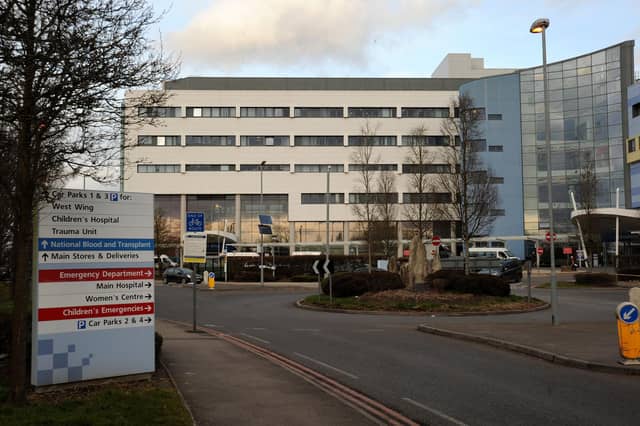

Families who had babies at the Oxford trust which downgraded Banbury's maternity hospital in 2016, have been paid almost £30m for birth injuries since 2020.
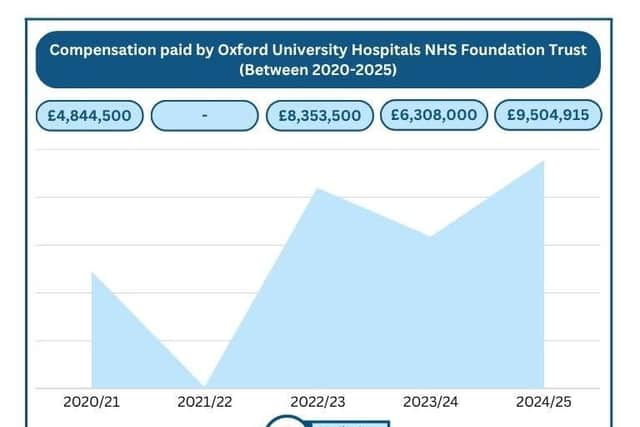
The highest amount of compensation given to any family during that time was £9,504,915, paid out in the last year.
Figures obtained by Medical Negligence Assist through Freedom of Information found that since 2020, families whose babies were born at Oxford University Hospitals Trust birth units have been paid a total of £29,010,915.
In that time 71 claims involving birth injuries were lodged against the trust, 32 of which have been settled so far. The trust delivers around 7,500 babies per year, the vast majority at the John Radcliffe Hospital. Today (Tuesday) the OUH said the money is paid by NHS Resolution through a clinical negligence scheme, not by the OUH.
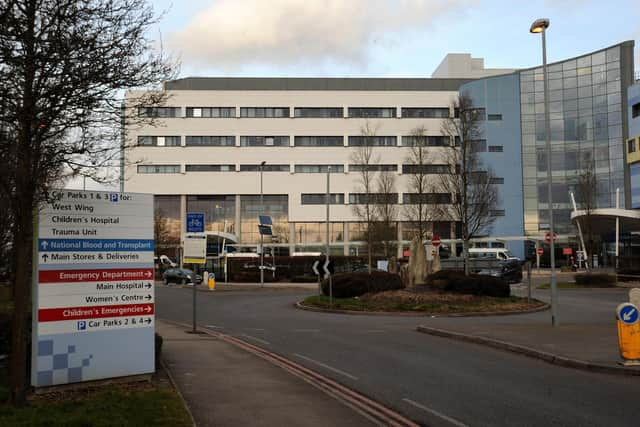
The highest number of claims made against the trust came in 2022/23, with a total of 18. The next highest was 2023 – 24 with 17 claims.
There is a wide range of injuries that can result from births, such as bone fractures, especially of the collarbone or brachial plexus injuries, which involve damage to nerves in the neck and shoulder.
Other common types of birth injuries caused by oxygen deprivation can directly affect the brain through conditions like cerebral palsy or hypoxic-ischemic encephalopathy.
Complications can arise from different factors like prolonged or difficult labour, foetal malposition, delivery trauma and maternal conditions such as diabetes or infection.
The figures obtained by the company show that NHS trusts have experienced record levels of legal claims made against them for maternity failings in recent years, after botched care has led to hundreds of babies and women dying or suffering life-altering conditions.
In June of this year health secretary Wes Streeting ordered a national investigation into failing services for women and babies, which classed as many as two-thirds of 131 NHS maternity units as ‘inadequate’ or ‘requires improvement’.
The OUH maternity service comes under the rating ‘requires improvement’ overall with the headings safe, well-led and responsive requiring improvement and caring and effective being ‘good’.
The nationwide maternity and neonatal investigation, focusing on 14 hospitals including the John Radcliffe, is currently speaking to mothers before inspecting the service.
Numerous cases of birth trauma have been collected by Keep the Horton General (KTHG), which is campaigning for a return of full maternity services to Banbury, and campaign group Families Failed by the JR. Both are submitting evidence to the inquiry.
KTHG maintains the Horton obstetric unit, delivering 2,000 babies each year, acted as a vital safety valve for the JR service until it was centralised in 2016.
Yvonne Christley, Chief Nursing Officer at Oxford University Hospitals NHS Foundation Trust, said: “We are very sorry to all of the women and families who were involved in these incidents.
"We are a specialist centre for complex pregnancies and births, which means we provide expert care to a wide area. Unfortunately, there are times when things do not go as planned.
“In such tragic situations, we offer bereavement and other support services. Additionally, we thoroughly review every detail of the incident to determine if any aspects could have been managed differently.
"As an organisation, we are continually looking at how we can learn and improve. We work with patients, families, and carers to resolve any compensation claim at the earliest opportunity." Any payments made as part of birth injury settlements are made by NHS Resolution, not OUH, the trust said. NHS Resolution represents all NHS trusts in England and Wales, who are members of their Clinical Negligence Scheme for Trusts (CNST) and approve all ‘financial quantum’ decisions in CNST claims at its sole discretion, often for commercial reasons rather than due to admissions of liability.
Gareth Lloyd, a medical negligence solicitor for legal firm JF Law, said: “The NHS routinely pays out millions of pounds in compensation every year for entirely avoidable injuries suffered by both mother and baby as a result of substandard maternity care.
“If a baby is not delivered correctly, the nature of these injuries can often be life-changing, affecting not only the child but the entire family.
“In recent years, there has been a litany of scandals involving poor maternity care across the country, and sadly, in my professional experience, I have seen too many cases where both baby and mother have suffered avoidable harm.”
“While pursuing a birth injury claim can be emotionally difficult, it's important to hold healthcare providers accountable and ensure families receive the long-term support their child will need.”
Of 5,991 claims nationwide, 2,955 were settled with trusts paying out £2,242,073,583 in compensation.
NHS Resolution is an arm’s length body of the Department of Health and Social Care providing ‘expertise to the NHS on resolving concerns and disputes fairly, sharing learning for improvement and preserving resources for patient care’.
In its new strategy for 2025 – 28 NHS Resolution says: “Over the next three years, we will continue to focus on supporting trusts to deliver safe, personalised and compassionate patient care with a specific focus on our work in maternity and neonatal care, recognising it remains an important area of concern for the NHS. We will drive forward our ambition to inform and incentivise work to prevent brain injury at birth and to ensure an effective and compassionate response for families affected by maternity and neonatal incidents with an enhanced approach to family engagement.”
Medical Negligence Assist offers support to patients who may have suffered harm as a result of substandard maternity care and can see if they have grounds to submit a claim.