
Calls made for return of Banbury birth unit amid dire revelations about JR maternity
Calls have been made again for consultant maternity to be returned to Banbury’s Horton hospital after a national investigation’s shocking report on the JR birth unit.
Keep the Horton General (KTHG) campaign says Baroness Valerie Amos’s long-awaited report on the JR maternity unit confirms what the campaign has always claimed – that Oxfordshire mothers will only be safe with two obstetric birth centres, sharing the work.


Lady Amos’s report is published today (Tuesday). It describes in graphic detail the pressure on JR staff caused by outdated facilities, too many births and logjams.
The report comes after a nine-month investigation into the dismal state of maternity care in England. Lady Amos said the country’s maternity and neonatal system is ‘no longer fit to consistently deliver high-quality, compassionate care to every woman and family and requires urgent reform to put safety at its centre’.
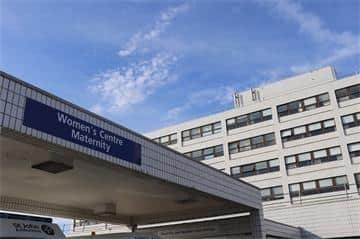
Her report contains analysis of maternity care at 12 large units including the JR. Many have received horrendous publicity about stillbirths, birth trauma and poor care.
KTHG published a dossier of 50 such cases affecting Banburyshire women – see here - in 2024. Lady Amos visited Banbury before Christmas to speak to mothers personally and hear their stories.
After spending time at the JR she said: “Underlying many testimonies is a strong belief that harm was preventable. Families repeatedly stressed the following concerns: missed warning signs, failure to act on known risks and repetition of the same mistakes time and time again.
“Families told us about not being listened to and felt the hospital prioritised doing things the ‘Oxford Way’ over their care preferences.
"Staff were committed to their jobs and wanted to provide women... with the best care they could… against a backdrop of daily challenges... including a lack of midwifery and medical staffing and delivering care in estates that were not fit for purpose."
Lady Amos’s report describes continual log-jams and women unable to move from labour to delivery to post-natal ward because of the outdated wards and layout demands.
Limits on medical staff created long waits for mothers and caused visible distress on resident doctors (formerly junior doctors).
"We saw delivery suites that didn’t have windows, were cold, small and cramped and had pillars in the middle affecting where equipment could be placed,” she said.
The Oxford University Hospitals Trust (OUH) said a programme of works carried out had not yet resolved the underlying capacity constraints.
The investigation team heard how JR midwives deliver significantly more babies than the national average.
"A consistent message from families was that they were not listened to or taken seriously when raising concerns about their own health or their baby’s condition.
"Many described clear warning signs, such as bleeding, reduced movements or leaking waters. However, they were dismissed and their concerns were not acted upon until the situation became more serious.
"Families described how healthcare professionals told them not to worry about symptoms, without any examinations being undertaken to provide clinical assurance.”.
Families recognised that staff were under significant pressure but described feeling like a nuisance or a burden when seeking basic care and recognition on one of the most important and potentially difficult days of their lives.
Cleanliness was an issue with conditions that did not meet basic standards. This included other women’s blood and urine in clinical areas and bathrooms.
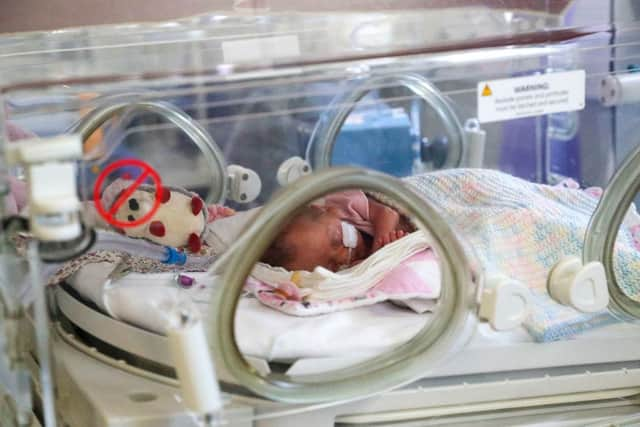
"We observed a toilet in the maternity unit at JR that had blood over it. We also heard about problems with cleanliness in Neonatal Intensive Care.”
Lady Amos heard about staffing issues at executive and senior level. One quote in the report says: “It's that domino effect, isn't it?... we get to the state where we are kind of bed-blocked in all directions when level five postnatal ward (42 beds) is full. Then you've got no patient flow at all and your backlog of inductions are queuing up.”
Back-to-back caesarean sections in multiple theatres simultaneously can leave insufficient staff to safely cover the rest of the unit, especially overnight, the investigators report.
At staff panels staff members were ‘distressed and emotional’, describing regular shifts where they felt staffing levels were not safe.
"Staff told us they felt they often got through a shift ’by the skin of our teeth’ rather than because staffing levels were appropriate for the amount of work.”
Some staff felt ‘beaten down’ because of bad publicity the JR received without the opportunity to reply. Junior staff reported lack of support from senior staff, saying it was only when the Care Quality Commission visited that senior staff were visible.
Senior staff in turn said they were pressurised by management demands.
"There appeared to be limited understanding (among senior leaders) of the concerns staff had regarding patient safety,” the report says.
"A senior leader acknowledged that tensions existed in relation to hierarchies and power relationships within the consultant body. They described the power dynamics in OUH as a resistance to letting go of professional power.
"We heard from clinical staff about the dominant culture in the Trust described as the ‘Oxford way’. There is evidence of a willingness to ignore national guidelines based on evidence in favour of what Oxford clinicians think is the better way and a culture among medical staff that presented itself as united on particular issues, despite the reality being different.
“A number of staff raised concerns about cultural issues relating to misogyny, racism and bullying.
"We were told that the prevailing culture at Oxford is difficult to challenge and if someone speaks up, they are subject to micro-level criticisms. Medical staff had left the Trust because of this treatment.”
KTHG campaign group said: “We have warned repeatedly since they removed obstetrics from the Horton that the JR would not be able to cope and mothers would suffer."
Simon Crowther, interim CEO of OUH, said: “To every woman, baby and family we failed, we are sorry. We have heard you and we are determined to be the service you deserve.”