
Northamptonshire councillor calls out council for 'weak' approach to flytipping as figures show just 18 penalty notices issued last year
A councillor has called out West Northamptonshire Council (WNC), which covers Brackley for having a “weak” approach to flytipping enforcement action in the area.
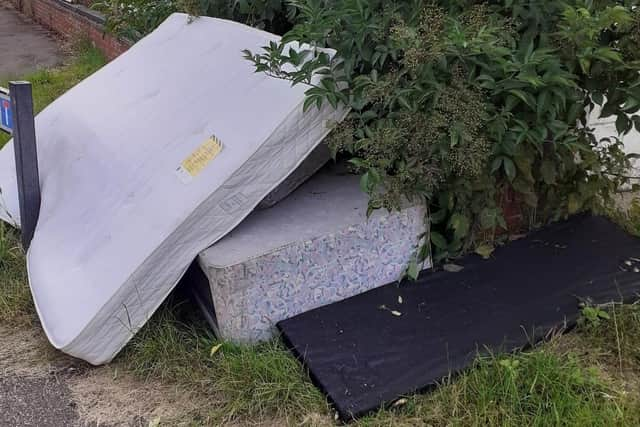
According to official statistics from the Department for Environment, Food and Rural Affairs (DEFRA), WNC logged 21,304 incidents of flytipping in the 2024/25 financial year. That works out as over 400 flytips a week on average, marking it as one of the local authorities with the highest number of recorded flytips.
Seven of the worst 10 flytip hotspots are in London borough councils, as well as Nottingham and Birmingham, with West Northamptonshire scoring in tenth place for the highest number of reported flytipping incidents.
Despite recording some 21,000 incidents within West Northants, DEFRA data on enforcement actions showed that only 18 fixed penalty notices (FPNs) for flytipping were issued by WNC, followed by one prosecution over the year.

Other local authorities that also issued 18 FPNs in 2024/25, according to the data set, include Trafford and North Tyneside, which reported 2,300 and 3,800 total flytipping incidents respectively – much lower than the overall levels in West Northants.
Cllr Farzana Aldridge asked cabinet members at a meeting last week (March 10) why repeated occurrences of flytipping in the area were not being addressed and what plans were in place to improve enforcement.
She said: “In both urban and rural areas, we face the blight of flytipping across West Northamptonshire.
“Our approach to enforcement is weak. It is an issue that is raised continuously by residents in my ward and indeed in other wards.
“No wonder the system culprits continue to pay no attention to the environmental crime that they regularly commit.”
Should fly-tipping occur on public land, it is the responsibility of the local authority to clear the rubbish and pay for all associated costs.
Data published at the cabinet meeting stated that the authority had cleared around 4,800 incidents of flytipping between October and December last year – a decrease from the same period in the previous year. It added that 97 per cent of those cleared by the council were removed within the five-day timeframe.
Cllr Nigel Stansfield, cabinet member for environment, recycling and waste, said: “We are clearing flytipping in a lot quicker and more efficient way – a lot of it is cleared now on the day, or the second day.
“Regarding the lack of enforcement, I’m very passionate about this as you know, and unfortunately I don’t think it’s been taken very seriously in this council for a long, long time and we need a change of how we deal with it.
“Without enforcement, figures will not improve and unfortunately in a few years time when we have a new contract with waste it will cost us a lot of money.”
Cllr Andrew Last, cabinet member for HR and corporate services, told the meeting that resources for enforcement were “stretched”, but that they were focused on targeting high-impact areas, as well as making use of new technology such as an AI camera in hotspot areas.
He said: “Using technology hand in hand with the community, hopefully we can increase conviction rates, and if we increase conviction rates word will soon get around and hopefully that will reduce the flytipping problem overall.”