
Mariette, Lady Saye and Sele of Broughton Castle, dies, aged 90
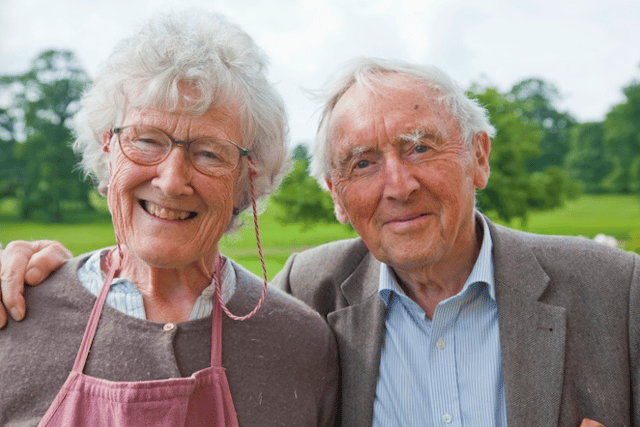
Mariette Helena, Lady Saye and Sele of Broughton Castle – devoted wife, mother and friend to so many in the Banbury area – has died aged 90.
Mariette, widow of Nathaniel, 21st Baron Lord Saye and Sele, died last Monday, April 6 at home in Bloxham, having been nursed brilliantly by Angelie and Lawrence Home Nursing.

She was born in London on February 4, 1936. Her father, Major-General Sir Guy Salisbury-Jones, was a distinguished soldier who fought in the First World War and later served in Palestine, Egypt, Greece, South Africa and France before joining the Royal Household as Marshal of the Diplomatic Corps.
This meant that Mariette’s early years were almost nomadic, with vivid experiences of Africa and the Near East, her beloved nanny Grace Andrews, known as Beauty, a constant presence at her side.
Her maternal grandfather, Sir Maurice de Bunsen, had been British Ambassador to Spain and Austria, so a current of public service and international affairs flowed through both sides of her family.
Mariette came back to England in 1946 to attend Heathfield School in Ascot, where, thanks to two inspiring teachers, she discovered JS Bach and Shakespeare, both lifelong passions. She liked to remind her husband she had been Captain of the Heathfield cricket team, though would add for others that the school roll amounted to only 90 girls.
Her parents bought a house - Mill Down - in Hambledon in Hampshire and she treasured this immersion in the English countryside, riding horses and roaming with her rough-haired dachshund Ommie, short for Omelette. Inspired by his love for France, Sir Guy planted vines on the chalky, south-facing slopes below the house, and Hambledon became the first commercial vineyard in the UK, widely regarded as the birthplace of English wine.
She left Heathfield aged 16 and came out as a debutante in 1953, leaving for parties from her parents’ grace-and-favour flat in St James’s Palace. She went to secretarial college, and worked briefly as a secretary, proud to be able to spell deoxyribonucleic acid because she had typed it so many times for a company promoting the commercial possibilities of DNA.
But the central journey of her life began aged 21, when she met Nat Fiennes in a cable-car in Zermatt in Switzerland. They would meet again at a ball in Windsor for the Windsor Horse Show and married on 4th December 1958 at St Margaret’s Westminster, in the gloom of one of London’s last smogs.
Mariette had five children. Richard developed epilepsy as a young boy and later suffered brain damage, meaning that he spent most of his adult life in residential care, with weekends and holidays at home; he died suddenly in his sleep aged 41. Another son, Thomas, died in an accident shortly before his third birthday.
Mariette endured these unimaginable losses with near-miraculous resilience and grace. She had twins in 1961 - Martin, a technology investor, and Susannah, an artist. Her youngest son, the writer and psychotherapist William Fiennes, was born in 1970, just after she and Nat had moved into Broughton Castle, the medieval and Tudor moated manor house near Banbury that had been the Fiennes family home for 650 years.
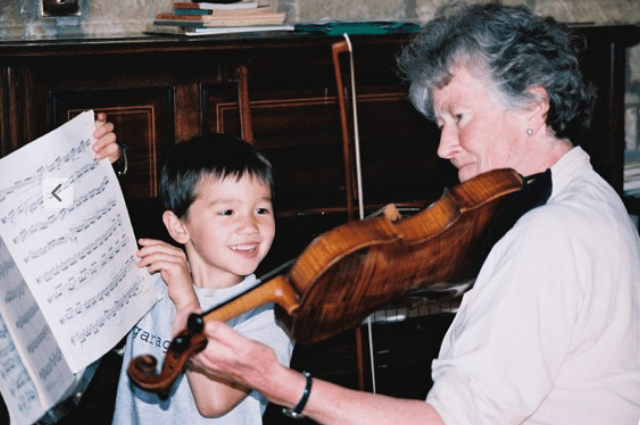
Broughton would be both outlet and arena for Mariette’s creativity and her capacity to connect with people. She might be polishing suits of armour with WD40, selling guidebooks and postcards from an improvised shop in the stables, pruning roses in the borders, judging the Knobbly Knees competition for the Yorkshire Dales Caravan Club at the top of the Park, or playing the viola with the Emperor of Japan – it didn’t matter, she met every task and person with the same open-hearted interest and loving spirit.
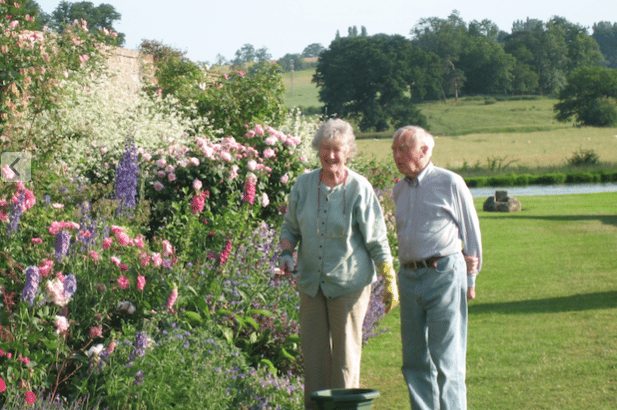
She and Nat together were largely responsible for the exceptional garden at Broughton today and oversaw many restoration and conservation projects.
In his book England’s 1000 Best Houses, Simon Jenkins awarded just 20 houses the maximum five stars. Broughton was one of them, which Mariette put down to the quality of the lunch she’d given the author when he visited, when in fact her and Nat's joint stewardship had seen this great house through something like a Golden Age.
She and Nat shared a deep Christian faith and both were devoted to helping others and supporting the wider community. Mariette served as Deputy Lieutenant for the county and was President or Patron of an extraordinary array of groups and charities, including Cherwell Guides, the Banbury Symphony Orchestra, Dementia Active, the Banbury Fine Arts Society, Parentline and the Banbury Choral Society.
Just as she had been a devoted carer to her eldest son Richard through his long illness, so she cared for her husband Nat in his last years, winching him in his wheelchair up a ramp into a converted van so they could drive from their retirement flat in Bloxham to Broughton on Open Days, when they would go on telling visitors the names of roses, or encourage children to ride the wooden red train down the bank on the south lawn. Few came away from an encounter with Mariette without feeling that she had enhanced or lit up the day.
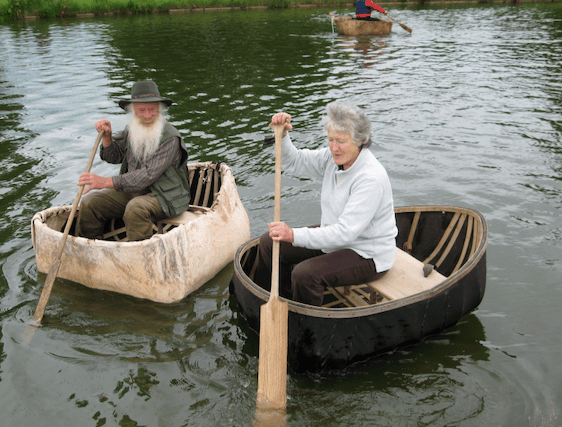
Indefatigable in her care for others, she somehow found room for her own enthusiasms - coracles; silk worms; herb gardens; playing Bach’s Brandenberg Concertos on the viola; trying to learn maths or Ancient Greek or Russian; planting a camomile lawn round the sundial in the Ladies Garden and weeding it meditatively on hands and knees on summer evenings; transforming old buttons, rags and pipe-cleaners into lifelike horses, dogs or spiders; learning Shakespeare sonnets or speeches off by heart; or delighting in chance everyday magic - a piece of root ginger that looked like an elephant, a letter from the Historic Churches Preservation Trust signed by a Rev Buttress.
This love-of-life was undimmed through her final illness. In her last weeks she scribbled a list of ‘Likes’ and ‘Dislikes’, and while the latter only ran to ‘sugar on the floor’ and ‘people saying ‘excetera’, the celebrations were brimming over: greaseproof paper, the squeak of wet cabbage, elm seats on chairs, tortoises, plain pieces of A4, rain, London diesel taxi sounds, oak bark, powder snow, soaped tack, and hay.
Lord Saye and Sele died in January, 2024. Lady Saye’s funeral takes place at St Mary’s Church, Broughton on Monday, April 27 at 2pm. The family welcomes all those who knew her to the service.